| Summary: Keeping a swimming pool clean involves more than removing leaves. Regular skimming, brushing, vacuuming, filter care, equipment checks, and water testing work together to keep the water clear, surfaces clean, and the entire system operating efficiently. |
A clean swimming pool does not happen by accident. Leaves, dust, sunscreen, body oils, insects, pollen, and other contaminants enter the water every day. Without regular care, they can collect on surfaces, place extra demand on the filter, and contribute to cloudy water or other maintenance problems.
The good news is that you do not need to spend hours cleaning your pool every day. A consistent routine makes the work easier and helps you notice common pool problems before they become expensive repairs.
This guide explains the essential tasks involved in maintaining a residential swimming pool, from everyday surface cleaning to brushing, vacuuming, filter maintenance, equipment checks, and seasonal care.
What Does Pool Cleaning and Maintenance Include?
Pool care involves several related tasks rather than one single cleaning job. Surface debris needs to be removed, pool walls and floors need regular brushing, settled material needs to be vacuumed, and the filtration system needs to be kept in good condition.
Pool water chemistry is also part of the routine. Cleaning removes physical contaminants, while proper water balance and sanitation help control microorganisms and keep the water suitable for swimming.
A good routine therefore combines physical cleaning, filtration, circulation, water testing, and equipment maintenance.
How Often Should You Clean a Pool?
The ideal schedule depends on the pool’s location, weather, surrounding trees, swimmer activity, and filtration system. A pool surrounded by trees may require much more frequent skimming than one in an open area.
As a practical starting point, inspect the pool regularly and remove visible debris before it sinks. Skim the surface as needed, brush the pool at least weekly, and vacuum according to the amount of debris accumulating on the floor.
Filters and other equipment require their own maintenance schedule. Pay attention to filter pressure, water flow, visible debris, and the manufacturer’s maintenance instructions.
Essential Pool Cleaning Tools
A Skimmer Net for Everyday Debris
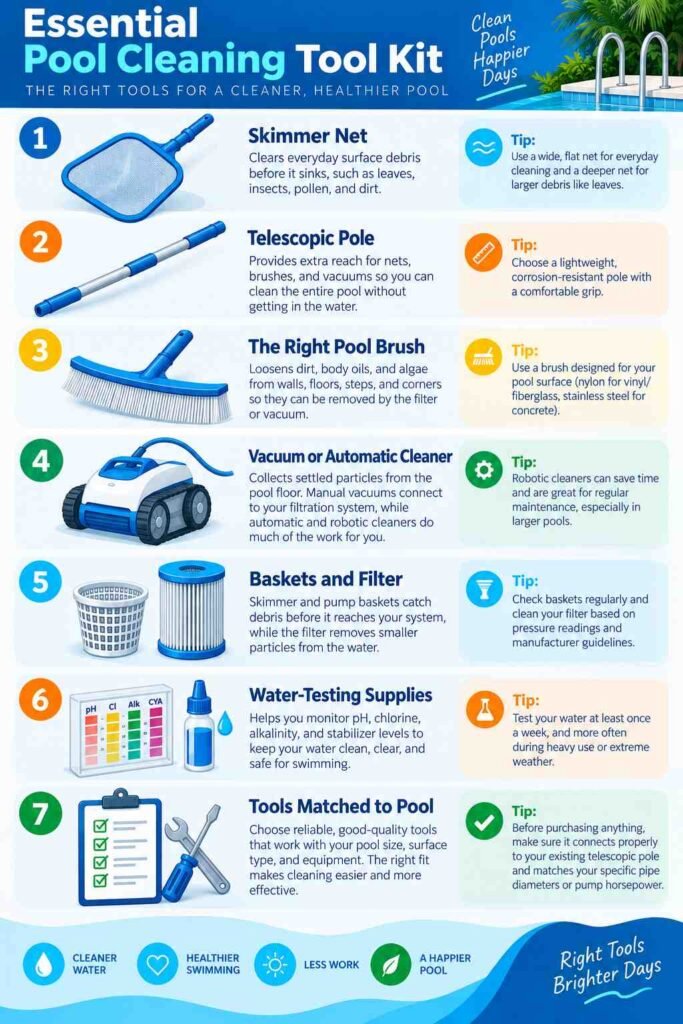
A skimmer net is probably the tool you will reach for most often. It makes quick work of leaves, insects, grass, pollen, and other debris floating on the surface. Removing this material before it sinks also means less debris ends up in the skimmer basket and filter.
A Telescopic Pole for Extra Reach
A good telescopic pole lets you reach across the pool without constantly moving around the deck or getting into the water. It can be used with a skimmer, brush, or manual vacuum, so look for one that feels sturdy and locks securely at different lengths.
The Right Pool Brush
Brushing helps loosen dirt, body oils, algae, and other buildup that can cling to pool surfaces. The important part is choosing a brush that suits your pool finish. A brush that works well on one surface may be too aggressive for another, so check the pool manufacturer’s recommendations before buying.
A Vacuum or Automatic Pool Cleaner
Even with regular skimming and brushing, some debris will settle on the pool floor. A manual vacuum can handle this job, while automatic and robotic cleaners can take over much of the work for you. Your pool size, surface, plumbing setup, cleaning habits, and budget can all influence which option makes the most sense.
Don’t Forget the Baskets and Filter
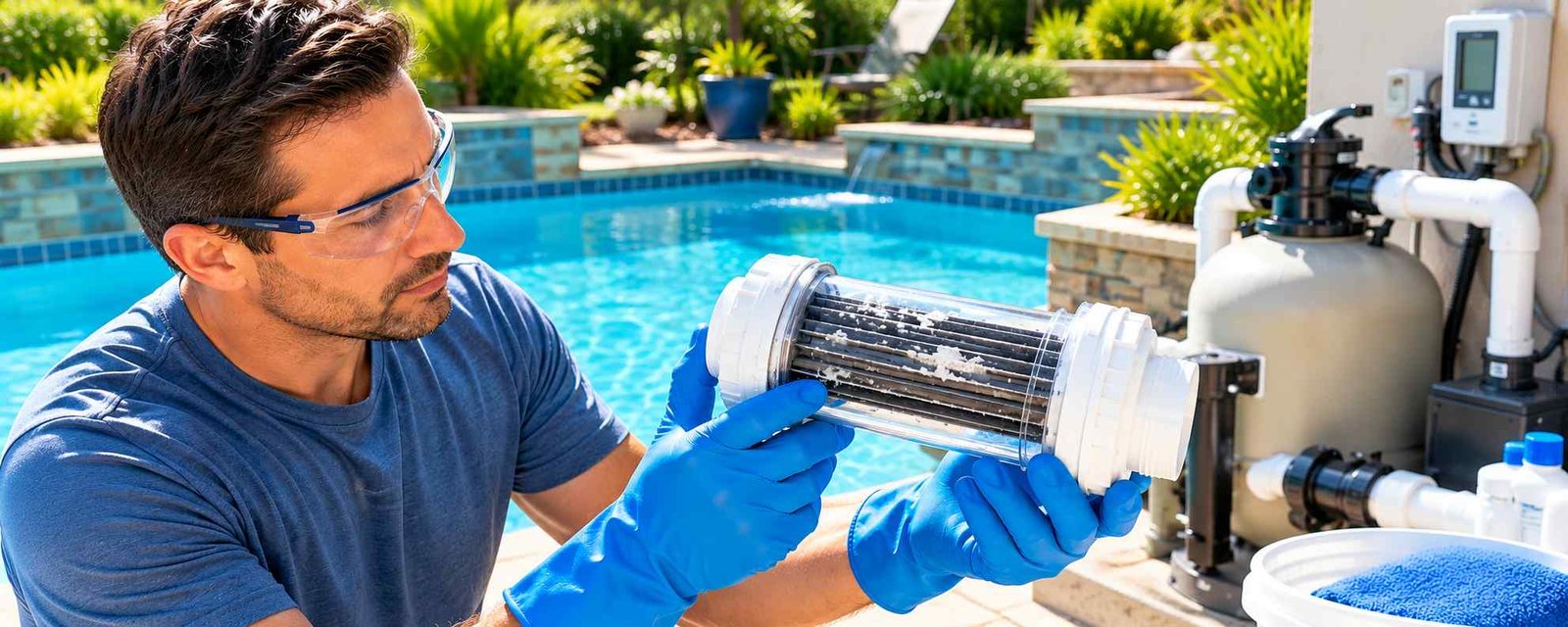
Cleaning tools are only part of the picture. Skimmer and pump baskets should be checked regularly so debris does not restrict water flow. Your filter also needs the right type of cleaning for its design, whether it is a cartridge, sand, or DE system.
Keep Basic Water-Testing Supplies Handy
A pool can look sparkling clean and still have a water chemistry problem. Keeping a reliable test kit or testing supplies nearby makes it easier to check the water as part of your normal maintenance routine. Physical cleaning and water care work best when they are handled together.
Choose Tools That Match Your Pool
You do not need a garage full of specialized equipment. Start with dependable basics and add tools when they solve a real problem you have. Before purchasing anything, make sure it connects properly to your existing telescopic pole and matches your specific pipe diameters or pump horsepower.
Step-by-Step Pool Cleaning Routine
1. Remove Large Debris First
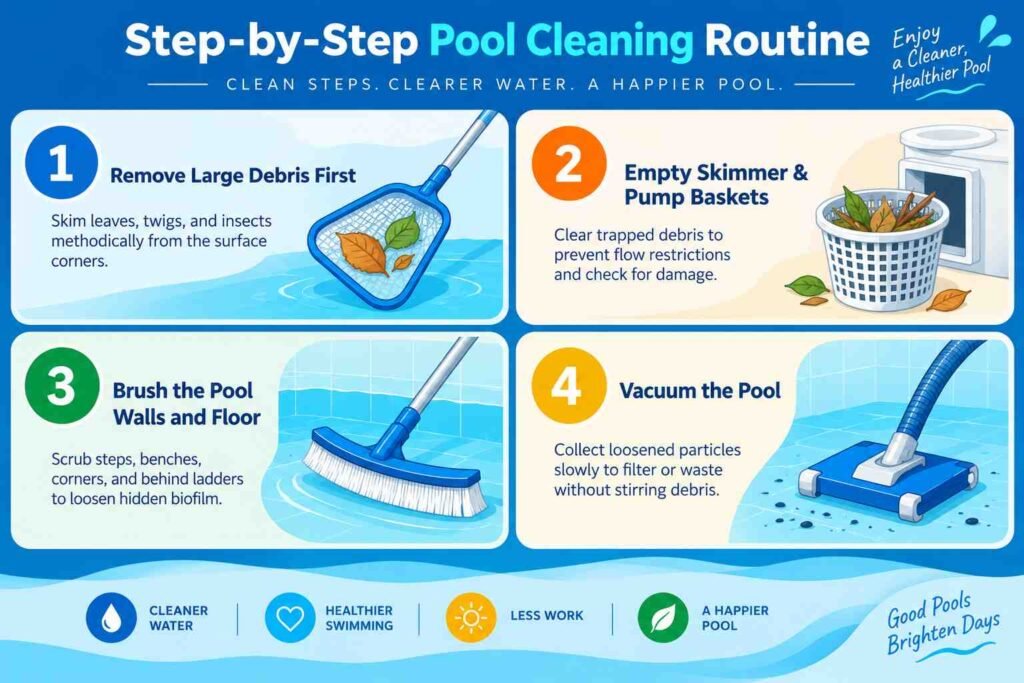
Start by removing leaves, insects, twigs, and other visible debris from the surface. It is easier to clean the water before debris sinks to the bottom or becomes trapped around the skimmer.
Use a skimmer net attached to a telescopic pole and work methodically across the pool. Pay particular attention to corners and areas where wind naturally pushes debris.
Removing debris regularly also reduces the amount of material that reaches the skimmer basket and filter.
2. Empty the Skimmer and Pump Baskets
After removing surface debris, check the skimmer basket and pump basket. Leaves and other material can restrict water flow when baskets become heavily loaded.
Turn off equipment when required by your system’s instructions before opening baskets. Remove debris and inspect baskets for cracks or damage before reinstalling them securely.
If a basket fills unusually quickly, look for a source of excessive debris rather than simply cleaning it more often.
3. Brush the Pool Walls and Floor
Brushing is easy to overlook. Dust, algae, body oils, and other material can adhere to pool surfaces even when the water appears clean.
Brush walls, corners, steps, benches, behind ladders, and other areas where circulation may be weaker. Work toward areas where the filtration system can collect suspended material.
Use a brush appropriate for your pool finish and follow the pool manufacturer’s recommendations.
4. Vacuum the Pool
Brushing loosens material, but it does not remove everything. Vacuuming collects debris and settled particles from the floor.
Manual vacuum systems connect to circulation, while automatic and robotic cleaners can perform much of the work independently.
Before vacuuming, check the cleaner and connections for damage. Move a manual vacuum slowly enough to avoid stirring debris back into the water.
Make sure you understand whether your system should vacuum to the filter or to waste.
How to Clean a Pool Filter
The filter removes suspended particles from the water. As it collects debris, its condition can affect filtration performance and circulation.
The cleaning method depends on the filter type.
Cartridge Filters
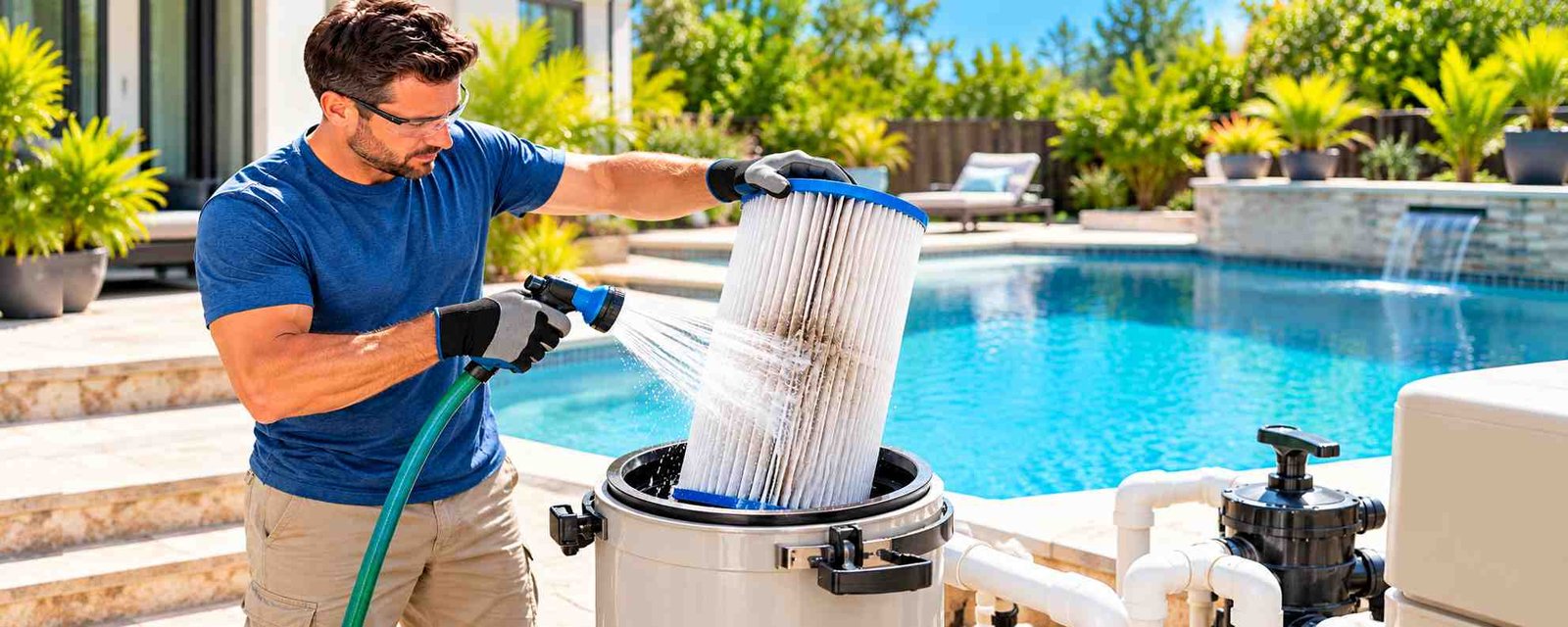
For cleaning cartridge filter, you need to remove and rinse it with a suitable hose according to the manufacturer’s instructions. A cartridge that remains dirty, has damaged pleats, or cannot maintain normal filtration may need replacement.
Sand Filters
Sand filters are commonly cleaned through backwashing. Follow the filter manufacturer’s instructions for backwashing and rinsing rather than relying on a generic schedule.
DE Filters
Diatomaceous earth filters require special attention because filter media is removed and replaced during appropriate cleaning procedures. Follow the manufacturer’s instructions carefully.
When Should You Clean a Pool Filter?
There is no single schedule for every pool. Weather, swimmer activity, vegetation, and water conditions affect how quickly a filter accumulates debris.
Compare current pressure with the normal pressure of your clean filter. A noticeable increase can indicate that the filter needs attention. Unusual pressure changes can also signal a circulation or equipment problem.
How to Keep Pool Water Clear
Clear water depends on filtration, circulation, sanitation, and balanced chemistry. Make sure return jets produce normal flow and skimmers can draw water effectively.
Test the water regularly and make corrections based on the results. When calculating chemical additions, use the pool’s actual volume rather than guessing.
Use the pool volume calculator to determine how much water your pool holds before calculating chemical adjustments.
How to Maintain a Pool Pump
The pump moves water through the circulation system. Check the pump basket regularly, listen for unusual sounds, and watch for changes in water flow.
A pump that repeatedly loses prime, runs unusually loudly, leaks, or produces weaker circulation deserves investigation. Follow equipment shutdown and safety procedures before opening the system.
How to Maintain Pool Skimmers
Skimmers remove floating debris before it reaches the circulation system. Check the opening and basket regularly and make sure the water level is appropriate.
If a skimmer consistently has weak suction, investigate possible line, pump, valve, or circulation problems rather than assuming it only needs cleaning.
How to Maintain an Automatic Pool Cleaner
Inspect cleaners for trapped debris, worn brushes, damaged tracks, blocked intake areas, leaks, or other wear. Robotic cleaners generally need their filter baskets or bags emptied after use.
How to Clean Pool Steps and Corners
Steps, corners, benches, ladders, and other areas may receive less water movement. Brush them deliberately instead of assuming normal circulation will clean them.
How to Remove Leaves from a Pool
Remove large leaves before they become waterlogged and sink. Use a deep leaf net for larger amounts and a flat skimmer net for routine surface cleaning.
If your pool regularly collects leaves, maintaining surrounding vegetation or using a suitable cover may reduce the workload.
Pool Cleaning After Heavy Rain
Heavy rain can dilute pool water and introduce mud, dirt, and other contaminants through surface runoff. After significant rainfall, inspect the water and surrounding deck for runoff entering the pool before deciding what chemical adjustments are needed.
Test the water rather than adding pool chemicals simply because rain occurred. Check the water level, skimmer, pump basket, and filter pressure, and look for signs that runoff has entered the pool.
Pool Cleaning After a Pool Party
Heavy swimmer use can introduce sunscreen, body oils, sweat, cosmetics, and other contaminants. Remove visible debris, check water chemistry, and allow circulation and filtration to process suspended material.
How to Maintain a Pool in Summer
Summer can bring more swimming, stronger sunlight, warmer water, and more debris. Check the pool more frequently during heavy use and keep up with skimming, baskets, brushing, and testing.
Pool Maintenance in Fall
Fall can bring heavy leaf accumulation, especially after windy weather. Remove leaves promptly to prevent them from accumulating in the pool, skimmer, and baskets, and begin preparing the pool and equipment for the colder months if you plan to winterize it.
Pool Maintenance in Winter
Winter care depends on climate and whether the pool remains open or is winterized. Follow the pool and equipment manufacturer’s instructions for testing, circulation, cleaning, plumbing protection, and covers.
How to Create a Simple Weekly Pool Maintenance Routine
- Every Few Days: Check the water surface and remove visible debris. Inspect the skimmer basket and look for anything unusual with water flow or equipment operation.
- Once a Week: Brush the pool walls, floor, steps, corners, and other surfaces. Vacuum the pool if necessary and inspect filter pressure.
- During Heavy Use or Severe Weather: Test the water more frequently and inspect the pool after storms, large gatherings, or other events that may introduce additional contaminants.
- Monthly: Inspect cleaning equipment, baskets, hoses, automatic cleaners, and visible pump and filter components. Review maintenance records for recurring pool problems.
Common Pool Cleaning Mistakes to Avoid
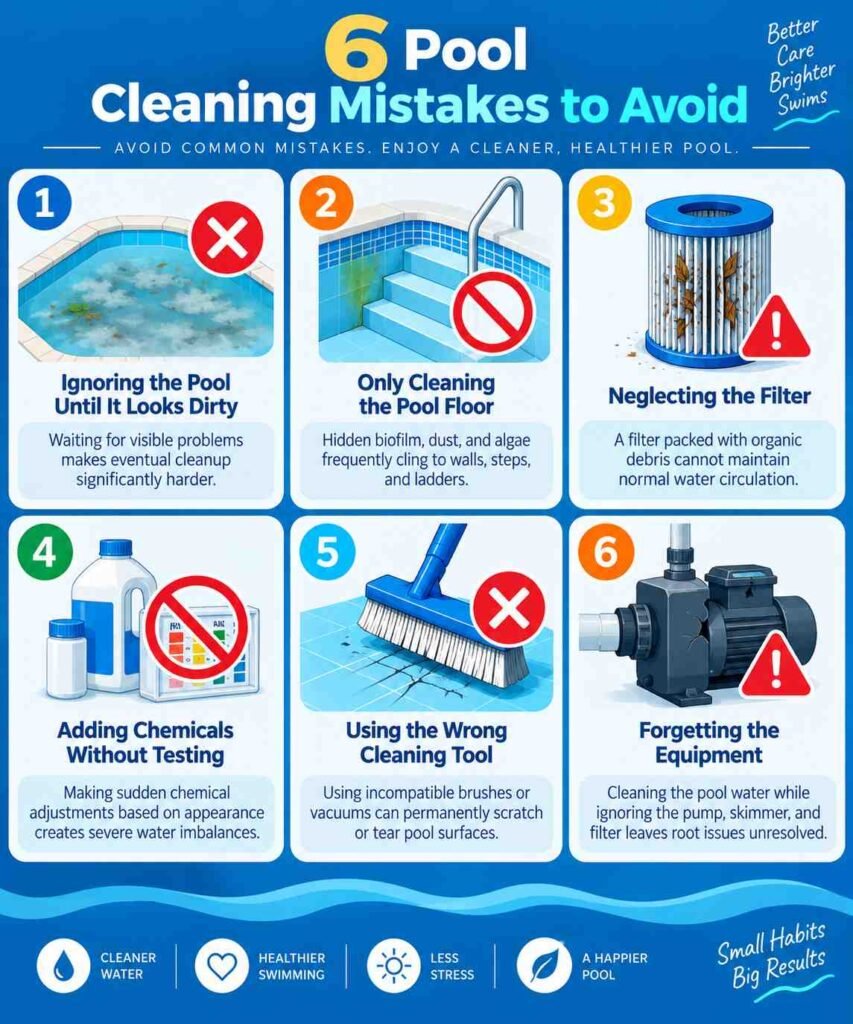
Ignoring the Pool Until It Looks Dirty
Waiting for visible problems often makes cleaning harder. Regular maintenance prevents debris and buildup from accumulating.
Only Cleaning the Pool Floor
Walls, steps, corners, benches, and ladders also need attention.
Neglecting the Filter
A filter full of debris cannot perform normally. Monitor pressure and follow the requirements for your filter type.
Adding Chemicals Without Testing
Chemical adjustments should be based on test results and the needs of the pool.
Using the Wrong Cleaning Tool
Check that brushes, vacuums, and other equipment are compatible with the pool surface.
Forgetting the Equipment
Cleaning the water while ignoring the pump, filter, skimmer, and cleaner can leave the underlying problem unresolved.
How to Make Pool Cleaning Easier
The easiest way to reduce cleaning work is to prevent unnecessary contamination.
Use a pool cover when appropriate, maintain surrounding vegetation, encourage swimmers to rinse before entering, and remove debris regularly.
Keep cleaning tools together in an organized location and maintain a simple record of water tests, filter cleaning, equipment maintenance, and unusual events.
Frequently Asked Questions
How often should I brush my pool?
For many residential pools, weekly brushing is a useful starting point. Pools with heavy debris, algae concerns, high swimmer activity, or poor circulation may require more frequent attention.
Is it better to vacuum a pool before or after brushing?
Brushing first generally makes sense because it loosens material from pool surfaces. Filtration or vacuuming can then remove suspended or settled debris.
How often should I clean my pool filter?
It depends on filter type and how quickly it accumulates debris. Follow the manufacturer’s instructions and monitor pressure against your normal clean-filter baseline.
Can I clean my pool without a vacuum?
Yes. A skimmer net and brush can handle many routine tasks, but vacuuming is useful for removing debris and sediment from the floor.
Why does my pool get dirty so quickly?
Trees, wind, pollen, dust, heavy swimmer activity, storms, and nearby landscaping can increase contamination. Poor circulation or filtration can make it more noticeable.
Should I run the pool pump while cleaning?
Many cleaning tasks can be performed with circulation operating, but opening baskets, filters, or other equipment may require the pump to be off. Follow manufacturer safety instructions.