| Summary: Most pool problems come from water chemistry, algae, poor circulation, filtration, equipment, stains, leaks, or weather. This guide helps homeowners identify symptoms, check likely causes, and choose practical next steps before spending money on unnecessary treatments or repairs. |
Every pool eventually develops an issue, whether it is cloudy water, algae, a chemical imbalance, weak circulation, or an equipment problem. The challenge is figuring out what the symptom is telling you before adding chemicals or replacing parts.
This guide takes a practical diagnostic approach. For each common issue, you can see what you are likely to notice, what is happening in the pool, what may be causing it, and which checks and next steps make sense.
What to Know about Pool Problems?
Pool problems rarely have just one possible cause. Cloudy water, for example, can come from poor filtration or unbalanced chemistry. Likewise, green water does not always mean the same type of algae. Equipment failures can also create symptoms that look like chemistry issues.
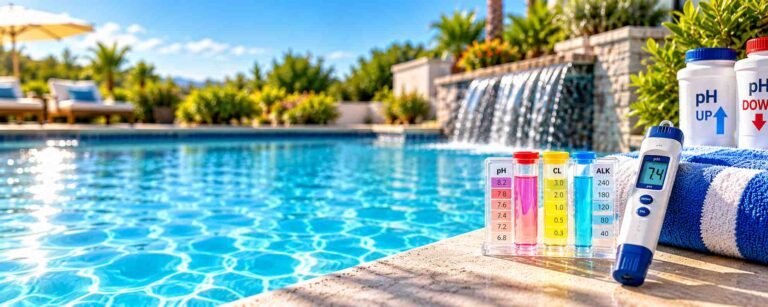
Start with simple checks before adding pool chemicals or replacing equipment. Test the water, inspect circulation, and check the filter. For most residential pools, chlorine and pH are useful first checks. The CDC recommends maintaining pH between 7.0 and 7.8.
Common Pool Problems You May Face
Green Pool Water
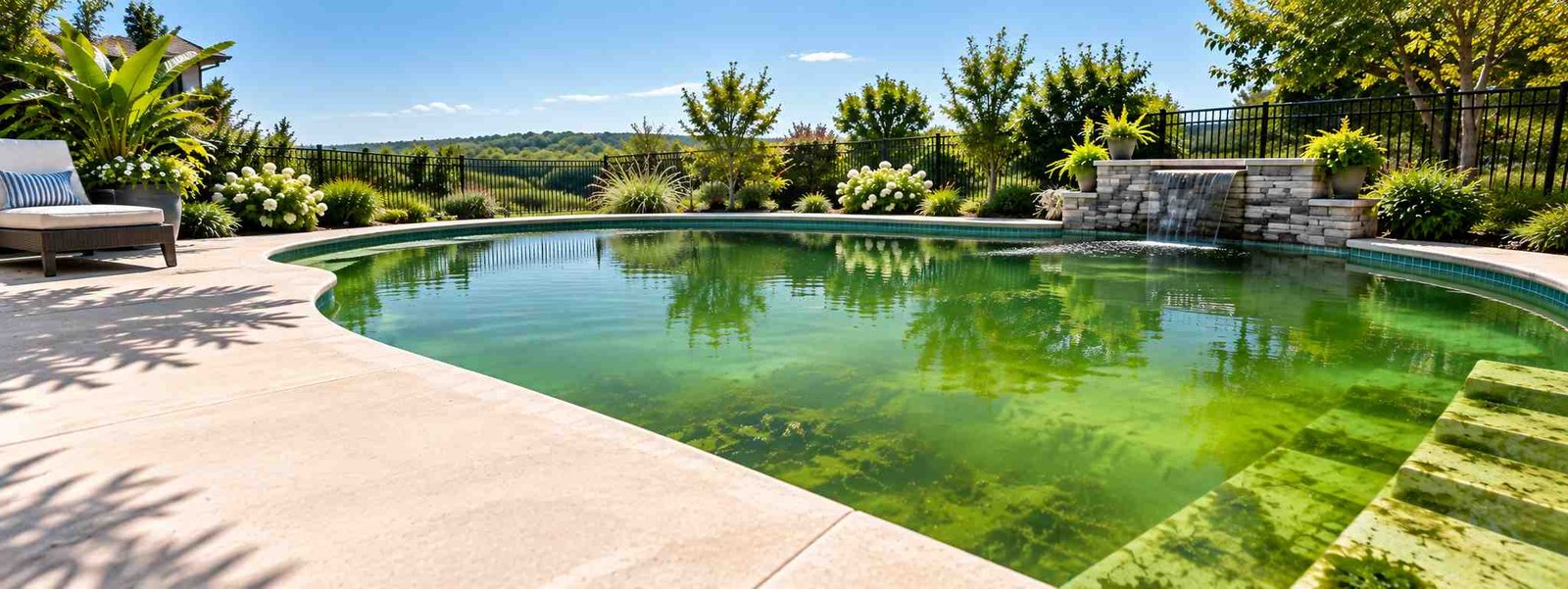
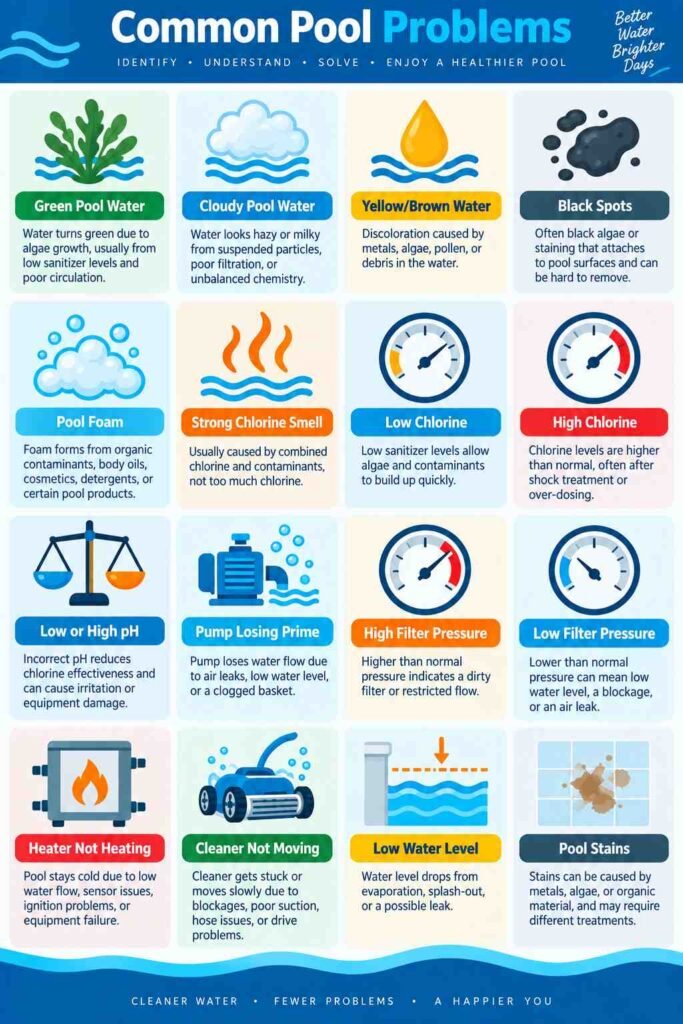
Green water is one of the most recognizable pool issues. In many cases, algae is responsible. It can grow when sanitizer levels fall too low. Warm conditions, sunlight, poor circulation, and debris can make the situation worse.
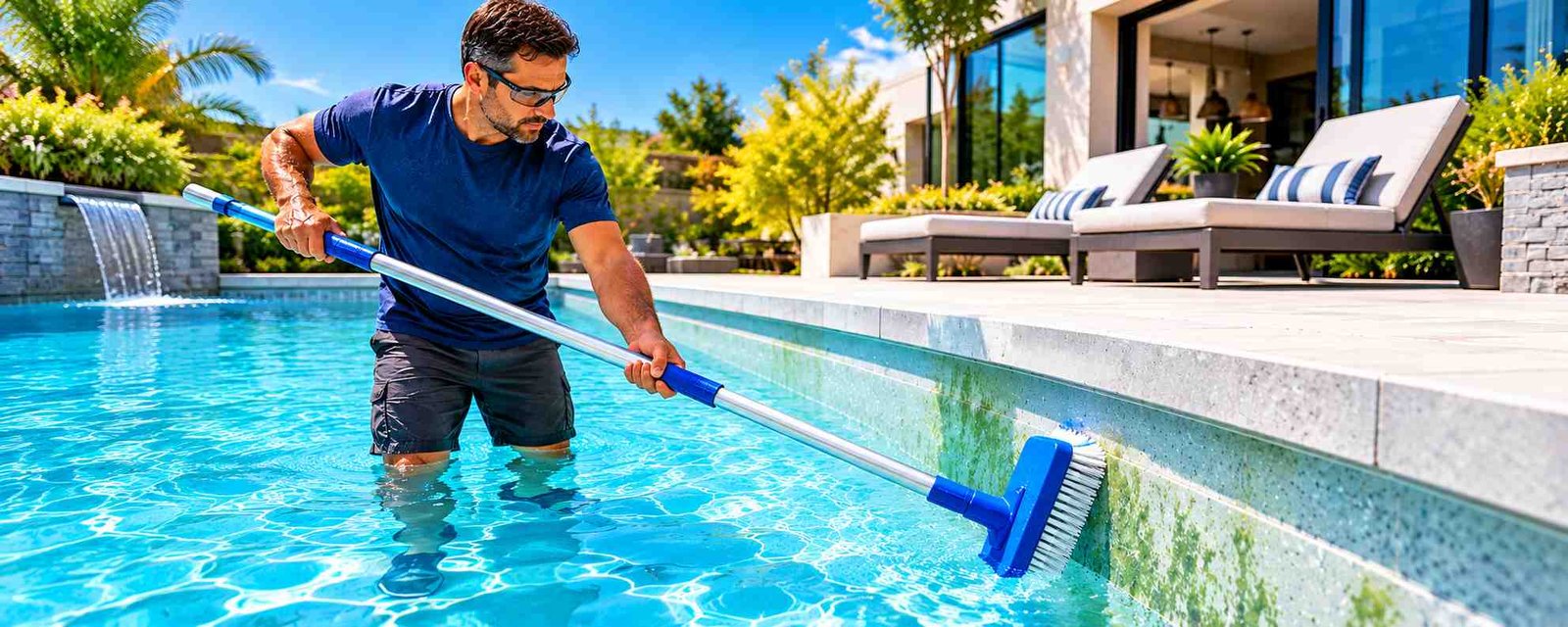
Remove leaves and debris before treatment. Brush affected surfaces to loosen growth. Correct the water chemistry, then apply an appropriate chlorine treatment based on your test results and product instructions. Run filtration during cleanup and clean the filter when pressure rises or flow becomes restricted.
Cloudy Pool Water
Cloudy water can have several causes. Suspended particles, poor filtration, heavy swimmer activity, and chemistry problems can all affect clarity. Start with the filter because it removes particles from the water. Check pressure against the filter’s normal operating range.
Next, test pH, chlorine, alkalinity, and other relevant levels. Heavy rain can also introduce contaminants. Give filtration enough time to remove suspended material. If the water stays cloudy, inspect the filter and circulation system more closely.
Yellow or Mustard-Colored Water
Yellow or mustard-colored material deserves closer inspection. It can come from algae, pollen, dirt, or metals. Mustard algae in pool often appears on shaded surfaces and areas with less circulation. It can return when affected surfaces and equipment are not properly treated.
Test the water before adding treatment. Then inspect the material on walls, steps, and other surfaces. If it repeatedly returns after cleaning, investigate algae more closely.
Black Algae and Dark Spots
Black spots can be difficult to remove because they may become firmly attached to pool surfaces. Black algae in pool is associated with dark colonies that develop on surfaces. However, metal stains and other marks can look similar.
Check the texture and location before choosing a treatment. If spots appear raised or resist normal cleaning, investigate algae. Treatment may require surface cleaning and proper sanitation. Repeated outbreaks can also point to circulation or sanitizer problems.
Pool Foam
Foam can appear after certain products enter the water. Body oils, cosmetics, detergents, and other organic contaminants can also contribute. Check the water chemistry first and consider recent products or heavy swimmer activity.
If foam continues after correcting the water and removing contaminants, inspect the filtration system. Avoid adding another chemical simply to hide the symptom.
Strong Chlorine Smell
A strong chlorine smell does not necessarily mean the pool contains too much chlorine. Chlorine reacts with contaminants such as sweat and other organic material. These reactions can produce combined chlorine compounds.
Test the water instead of relying on smell alone. Check free chlorine and combined chlorine when your test method supports it. Then address the underlying contamination and water-quality issue.
Low Chlorine
Low chlorine can result from heavy swimmer activity, sunlight, rain, contamination, or insufficient dosing. Cyanuric acid, often called CYA, also affects chlorine management.
Test the water before adding more sanitizer. Consider recent weather and pool use. Use the pool chlorine calculator to know the adjustment needed from your current and target chlorine levels.
High Chlorine
High chlorine usually follows excessive sanitizer addition or treatment with a large dose. Do not add more chemicals until you understand the current reading. Retest with a reliable method.
Allow the level to fall naturally when appropriate. Keep the pool closed if the product instructions require it. Follow the manufacturer’s directions for retesting and reopening.
Pool pH Problems
pH affects swimmer comfort and sanitizer performance. The CDC recommends a pH range of 7.0 to 7.8 for residential pools. Higher pH can reduce chlorine effectiveness, while lower pH can increase corrosion risk.
Test your pH and total alkalinity together before making any major chemical adjustments. Make changes gradually, allow circulation, and retest. Use the pool pH calculator to estimate the adjustment needed.
Pool Alkalinity Problems
Total alkalinity helps resist rapid pH changes. When it is too low or too high, maintaining stable pH becomes harder. Test alkalinity before making repeated pH adjustments.
Adjust alkalinity according to your result and the chemical label. Then circulate and retest. Use the pool alkalinity calculator to know the adjustment needed for your pool.
Pool Pump Problems
The pump moves water through the circulation and filtration system. Common symptoms include unusual noise, loss of prime, weak flow, air bubbles, and reduced circulation.
Start with the water level, skimmer basket, and pump basket. If the pump loses prime, check for air entering the suction side. A damaged lid seal or loose connection can contribute.
Pool Filter Problems
A dirty or restricted filter can reduce water clarity and circulation. High pressure often means increased resistance through the filter, although the exact cause depends on the equipment.
Compare the current pressure with normal clean-filter pressure. Low pressure can have other causes, including suction restrictions or pump issues. Clean or service the filter according to the manufacturer’s instructions.
Pool Heater Problems
A heater can stop heating because of low flow, dirty filters, sensors, ignition problems, or equipment faults. Start with water flow, then check the heater display for an error code.
Use the owner’s manual to interpret the code. Do not bypass safety switches or attempt gas and electrical repairs without proper qualifications.
Pool Cleaner Problems
Automatic cleaners can stop moving because of blocked components, damaged hoses, weak suction, or drive-system problems. For suction cleaners, inspect the hose and skimmer connection. For robotic cleaners, check the filter basket or bag.
Pressure cleaners need different checks. Inspect the pressure line, booster pump, and connections. Avoid replacing the cleaner before identifying the actual cause.
Pool Circulation Problems
Poor circulation can create areas where debris and contaminants collect. Steps, corners, benches, ladders, and areas behind fittings may receive less water movement.
Watch the return jets while the pump runs. Check the skimmer, pump basket, filter, and valves. Good circulation helps distribute treated water and move debris toward filtration.
Pool Water Level Problems
Evaporation and splash-out cause normal water loss. However, an unusually fast drop may indicate a leak. Watch the level for several days and consider weather and pool use.
If the level keeps dropping when the pool is not being used, inspect visible plumbing and equipment connections. Underground leaks may require professional detection.
Pool Stains
Pool stains can come from metals, organic material, algae, leaves, or surface issues. Color can provide a clue, but it does not confirm the cause.
Test the water before applying a stain treatment. Some treatments affect chemistry or require specific conditions. Identify the stain before choosing a product.
Pool Water Turning Brown
Brown water can result from metals, dirt, organic contamination, or serious water-quality problems. Start by testing the water and checking recent changes, such as fresh water, heavy rain, or disturbed sediment.
Iron and other metals can become visible after oxidation. Do not automatically shock the pool. First determine whether the problem involves algae, contamination, or metals.
Pool Water Turning Milky White
Milky water can develop when fine particles remain suspended. Poor filtration is one possible cause. Chemical imbalance can also cause minerals to precipitate.
Check filter pressure and water chemistry first. Then allow filtration to remove suspended material. If the issue appeared after adding chemicals, review what was added and in what amount.
Pool Problems After Heavy Rain
Heavy rain can introduce dirt, debris, and contaminants. It can also dilute chemicals and change water balance. After a major storm, remove debris before it breaks down.
Then test chlorine and pH, check the water level, and inspect equipment for debris. If runoff entered the pool, more extensive cleaning may be needed.
How to Troubleshoot a Pool Problem
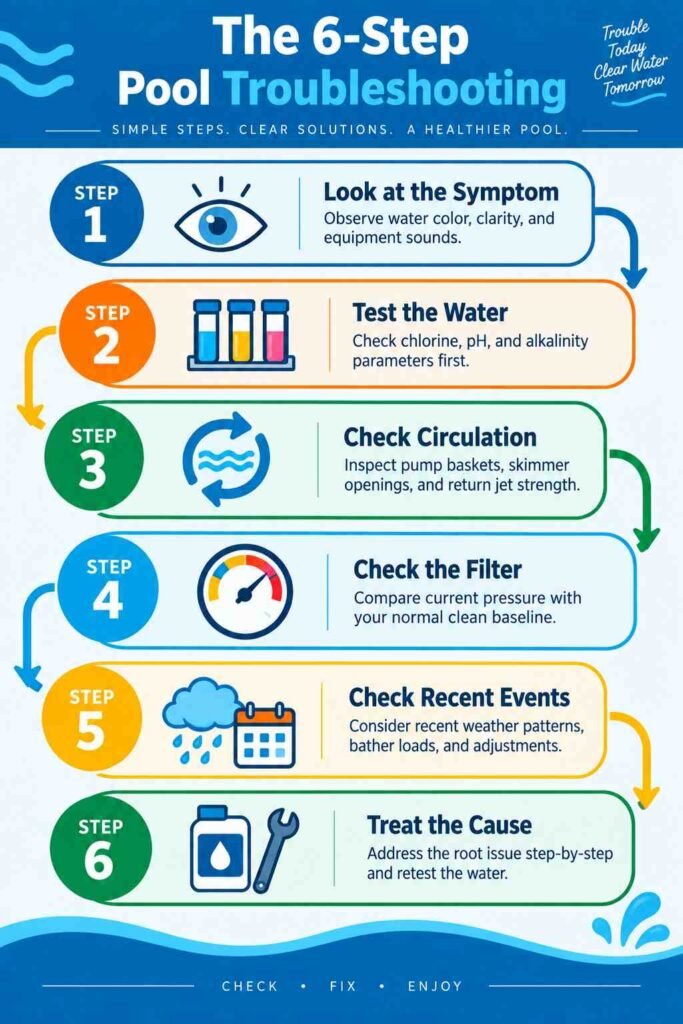
Step 1: Look at the symptom
Start with what you can see or hear, but look beyond the most obvious symptom. Note the water color and clarity, visible growth or stains, foam, water level, return flow, pump behavior, filter pressure, and any unusual equipment sounds. Also consider whether the problem appeared suddenly or developed gradually. These details can help narrow the likely cause before you add chemicals or replace equipment.
Step 2: Test the water
Check chlorine and pH first, then test alkalinity and any other parameters that fit the symptom. Record the readings before making adjustments, so you have a clear starting point. If a result seems unusual, repeat the test rather than making a large correction from one questionable reading.
Step 3: Check circulation
Inspect the pump, skimmer, baskets, valves, return jets, and filter as a complete circulation system. Make sure the water level is adequate and that baskets are not blocked with debris. Watch the return jets while the pump runs and look for weak or uneven flow. Areas that repeatedly collect debris or algae can be useful clues that treated water is not reaching every part of the pool effectively.
Step 4: Check the filter
Compare the current pressure with the normal clean-filter reading for your system. A higher-than-normal reading can indicate that the filter is loaded with debris or that flow is being restricted, while unusually low pressure can point toward a suction or pump problem. Clean or service the filter according to its type and the manufacturer’s instructions, then allow the system to run and see whether flow and pressure return to normal.
Step 5: Check recent events
Think about what happened shortly before the problem appeared. Heavy rain, unusually hot weather, heavy swimmer use, a long period without filtration, fresh water, chemical additions, or recent equipment work can all provide useful clues. A simple maintenance log showing test results, chemical additions, weather events, and filter cleaning can make recurring problems much easier to diagnose.
Step 6: Treat the cause
Avoid adding several products at once simply because the water looks wrong. Once the likely cause is identified, make the appropriate correction according to your test results and the product label. Allow the pool to circulate, then retest before deciding whether another adjustment is needed. If the problem continues despite pool chemistry and equipment checks, investigate the underlying cause rather than repeatedly increasing chemical doses.
Pool Equipment Problems and Water Problems
Water-quality problems usually start with testing. Equipment problems usually require inspection of the affected component. A failed pump can reduce circulation and contribute to cloudy water or algae. Poor chemistry can also damage equipment over time.
Therefore, diagnosis should consider both the water and the equipment.
How to Prevent Common Pool Issues
Prevention starts with consistent testing and basic maintenance. Test the water regularly and adjust chemistry according to results. Keep the filter and pump operating as recommended. Brush surfaces before buildup becomes difficult to remove, and empty baskets before they become heavily blocked.
Inspect equipment regularly for leaks, unusual sounds, reduced flow, damaged seals, and pressure changes. Keep simple records of chemical additions and maintenance. These notes can reveal patterns when issues return.
When to Call a Pool Professional
Some issues need professional help. Get qualified assistance for suspected gas leaks, electrical faults, major plumbing leaks, structural damage, or serious equipment failures. Also seek help when basic testing and inspection cannot identify the cause.
Never enter a pool or spa with a loose, broken, or missing drain cover. Suction hazards can cause severe injury. Follow applicable safety requirements and manufacturer instructions.
Pool Chemical Safety
Handle pool chemicals carefully. Never mix chemicals unless the product instructions specifically allow it. Keep containers closed and dry, and store incompatible products separately.
Follow the manufacturer’s label for handling, storage, dosage, and protective equipment. If you are unsure about a treatment, check the instructions before proceeding.
Frequently Asked Questions About Pool Problems
How long can a pool sit stagnant without a pump before it turns green?
There is no single time limit because temperature, sunlight, debris, and sanitizer levels all matter. Warm, stagnant water can develop problems quickly when chlorine is not maintained. If circulation stops, restore safe operation and test the water before treating it.
Will heavy rain instantly ruin my pool chemistry settings?
Not necessarily. Rain can dilute chemicals and introduce contaminants, but the effect depends on rainfall, pool volume, and starting chemistry. After heavy rain, remove debris and test the water. Then make adjustments based on the new readings.
Why is my pool losing water?
Evaporation and splash-out cause normal loss. Rapid or continuous loss may indicate a leak. Track the level when the pool is not being used. If the drop remains unusual, consider professional leak detection.
Why is my pool pump losing prime?
Air can enter the suction side, or water flow may be restricted. Check water level, skimmer and pump baskets, lid seal, and visible connections. Persistent problems may require suction-system inspection.
Why is my pool filter pressure too high?
High pressure can indicate a dirty filter or restricted flow. Compare the reading with normal clean-filter pressure. If cleaning does not restore normal pressure, investigate valves and plumbing.
Can a saltwater pool still have algae?
Yes. Saltwater systems generate chlorine, but they do not make a pool immune to algae. Low chlorine production, poor circulation, incorrect chemistry, or heavy contamination can still allow growth.
Can I swim when my pool has a problem?
It depends on the issue. Do not swim when water is unsafe, heavily contaminated, chemically outside safe operating conditions, or equipment creates a safety concern. Test the water and correct the issue first.