| Summary: A rectangular pool can make your backyard more enjoyable without taking over the entire outdoor space. The layouts suit modern and traditional homes, with options ranging from compact pools for small yards to longer designs for lap swimming. Features such as tanning ledges, built-in benches, contrasting tile, and outdoor lighting can improve comfort and appearance. The right choice depends on your yard, budget, intended use, and maintenance preferences. |
Rectangular pools are popular for their clean appearance and practical layout. Their simple geometry can complement modern homes, traditional properties, narrow yards, and larger outdoor living areas.
The shape offers flexibility, too. You can include entry steps, underwater seating, a shallow lounging area, or an attached spa while keeping the main swimming area easy to navigate. Straight edges can also make it easier to plan the surrounding patio and estimate the water surface.
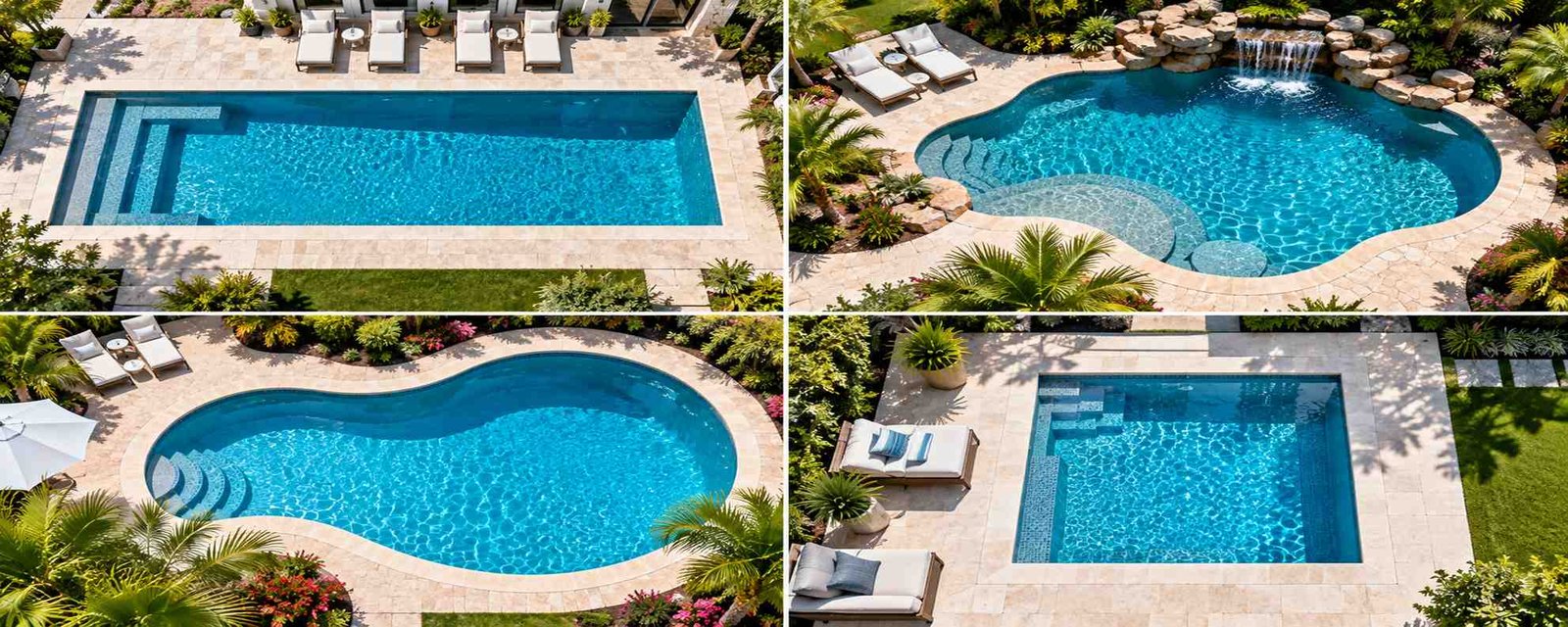
Before choosing a layout, think about how you will use the water. A pool intended for exercise has different requirements from one designed for relaxing with family or entertaining guests. For a wider comparison of pool outlines, visit our swimming pool shapes guide.
15 Rectangular Pool Design Ideas
1. Create a Modern Pool with Clean Lines
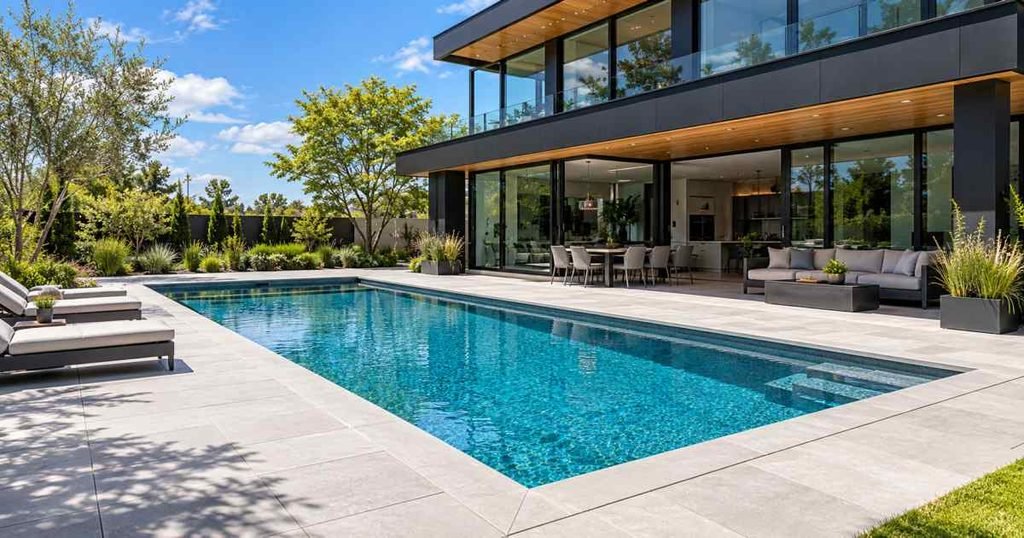
A simple geometric layout can give your backyard a contemporary look. Pair straight coping edges with a restrained palette of light stone, gray paving, or dark accents. Matching the pool’s lines to the architecture of your home can help the entire outdoor area feel connected. This style works particularly well with flat rooflines, large windows, and minimalist exteriors. Keep the materials coordinated rather than introducing too many competing colors and textures.
2. Make the Most of a Small Backyard
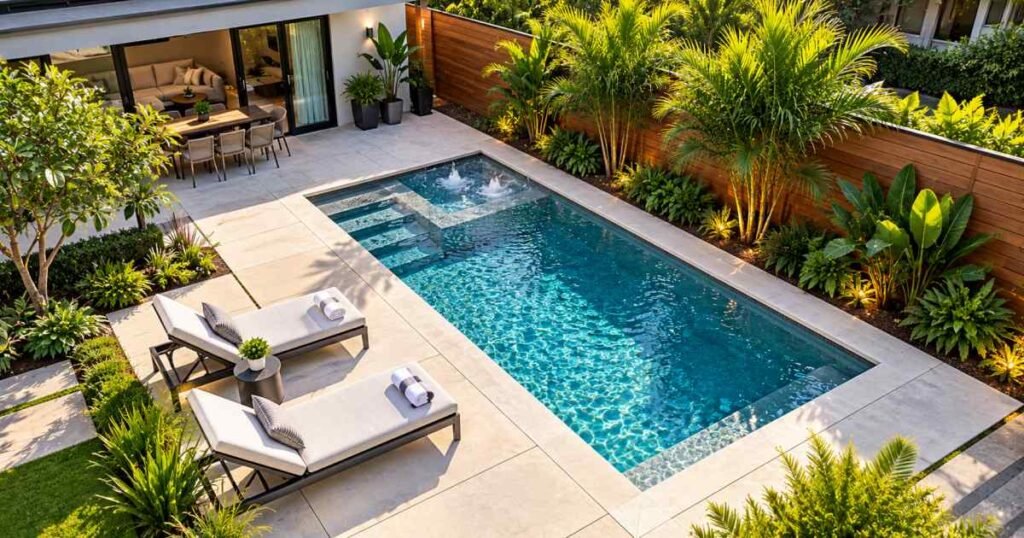
A compact rectangular pool—or a “spool,” if it combines a small pool with spa-like features—can leave room for a patio, a few lounge chairs, or planting. A 10-by-20-foot layout is one possible starting point, not a standard that fits every yard. The usable space depends on setbacks, access, drainage, equipment, and the room required for a safe barrier. Check these constraints before settling on dimensions.
3. Choose a Long, Narrow Layout
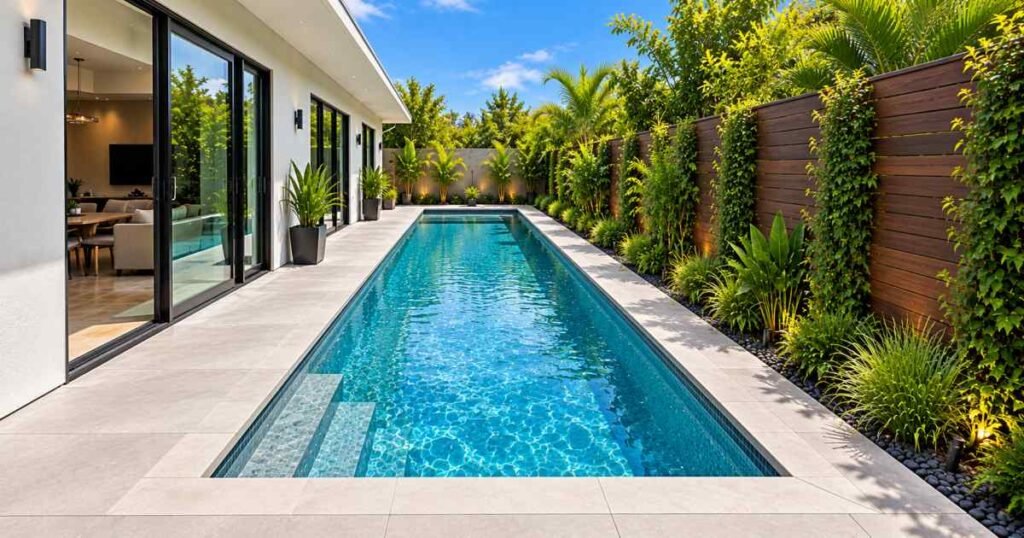
A long, narrow layout can make good use of a side yard where width is limited. Keep the surrounding deck simple and avoid squeezing in features that block the walkway or make equipment difficult to reach. This option is best when the goal is a clean, space-conscious design rather than a dedicated training pool.
4. Design a Dedicated Lap Pool
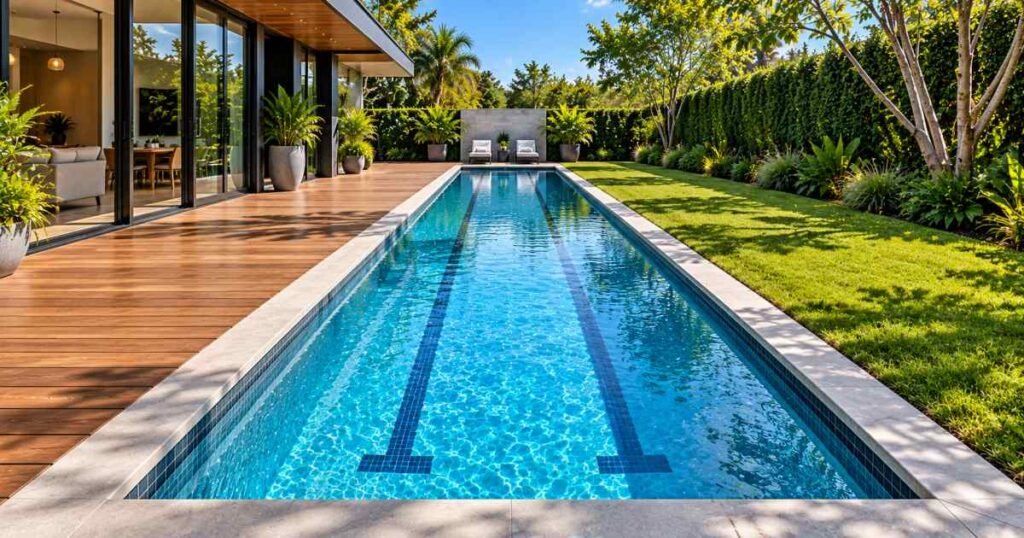
For regular exercise, prioritize usable length, clear turning space, and a route free of benches or tanning ledges. A residential lap pool around 30–40 feet long may suit some swimmers, but it still requires frequent turns and is much shorter than a competition pool. Choose dimensions based on your stroke, fitness goals, and available space rather than treating one length as a universal minimum.
5. Add a Tanning Ledge
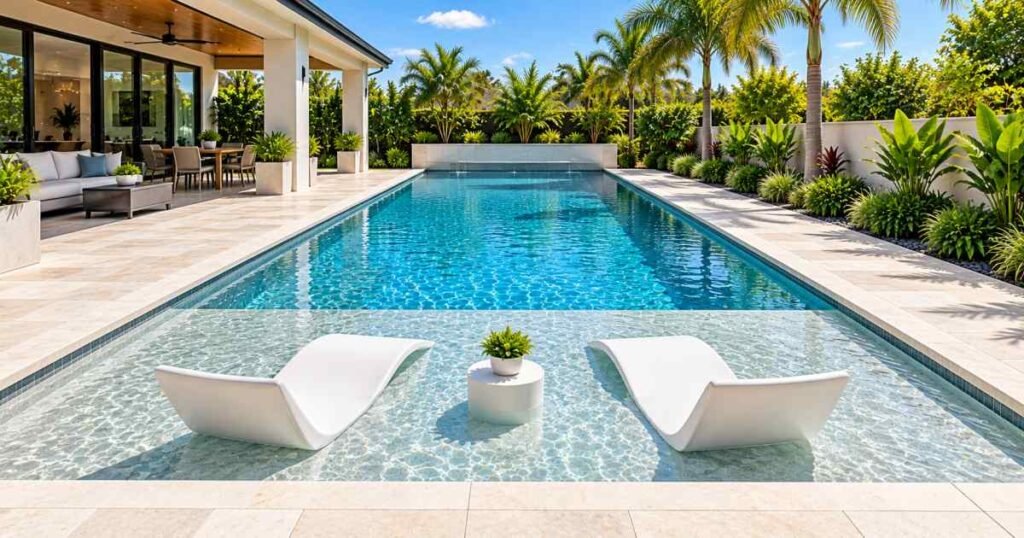
A tanning ledge provides a shallow area for sitting or relaxing in a small amount of water. Placing it at one end can create a separate lounging zone while preserving much of the main swimming area. Consider how the ledge will affect usable length, depth transitions, and circulation. The surface should be suitable for wet conditions, and the layout should not create a false sense of safety. Shallow water does not replace supervision or an appropriate pool barrier.
6. Include Built-In Underwater Seating
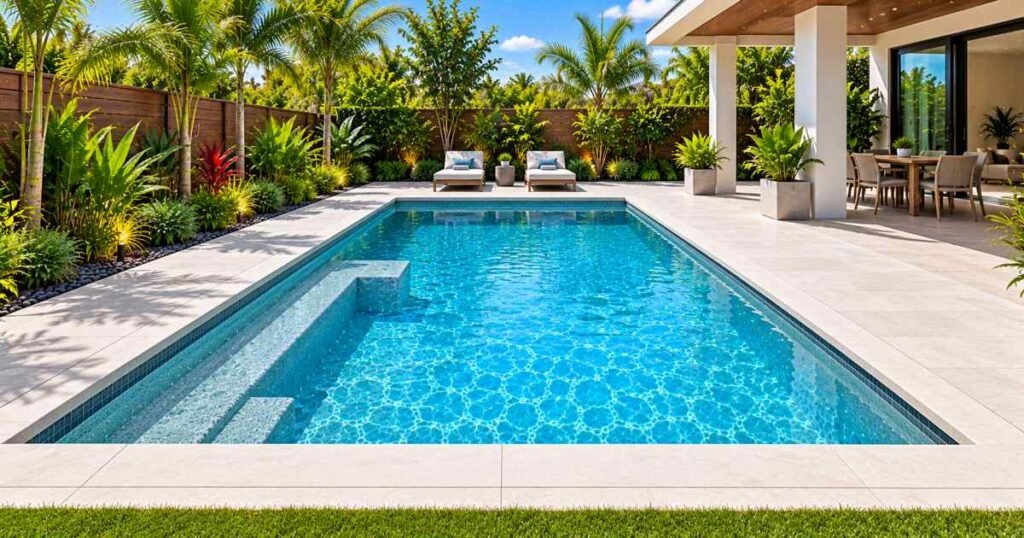
An underwater bench creates a place to sit without adding loose furniture to the water. It can run along one side or sit in a corner, but should not interrupt the main swimming route. Pool design guidance commonly places bench seating about 12–20 inches below the waterline, depending on the design and applicable code. The seat should be slip-resistant and visually distinct from the surrounding pool surface; confirm local requirements before construction.
7. Use Wide Entry Steps
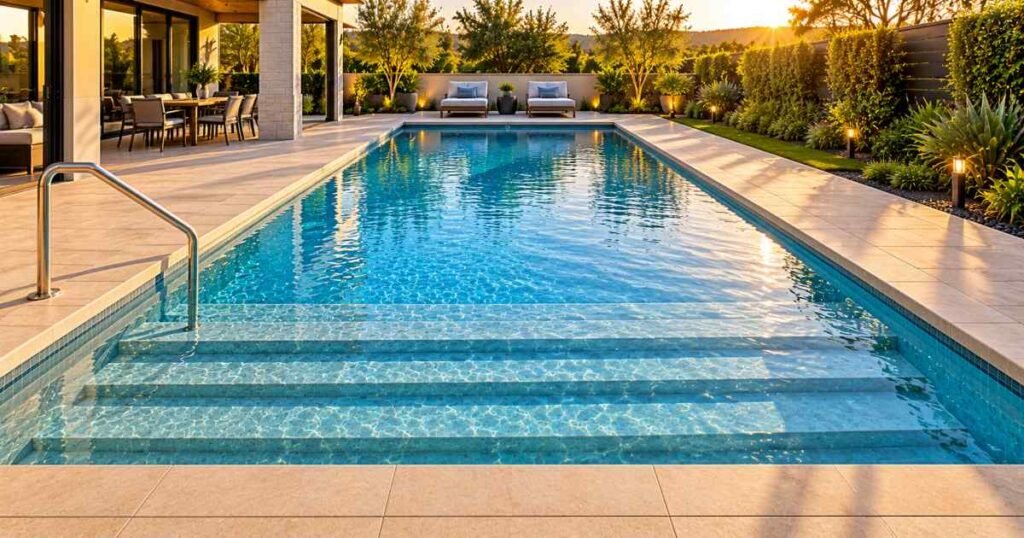
Wide steps can make getting in and out of the water more convenient. Depending on the layout, they can span one end or sit in a corner while leaving enough room for swimming. Choose a position that suits the pool’s dimensions and intended users. Steps should have suitable surfaces and remain visible underwater. If children or older adults will use the pool, discuss appropriate entry options with a qualified professional.
8. Add Contrasting Waterline Tile
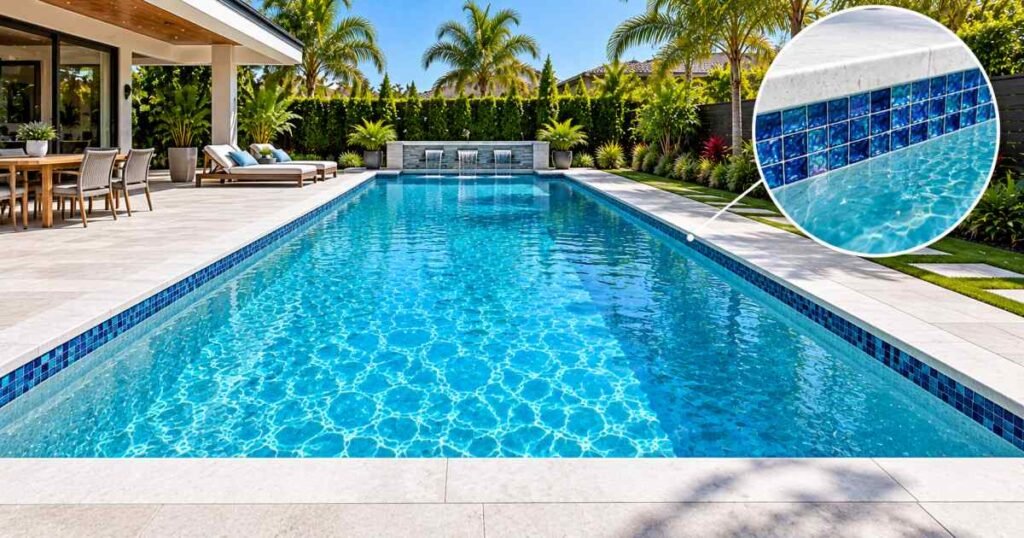
Waterline tile adds color and helps define the edge where water meets the wall. Pool-rated glass mosaic and porcelain tile are common choices because they are made for wet environments; in colder climates, check the product’s freeze-thaw rating as well. Use compatible setting materials and grout, and follow the tile manufacturer’s installation instructions. Blue, aqua, gray, and patterned finishes can all work, depending on the surrounding materials.
9. Choose a Light Interior Finish
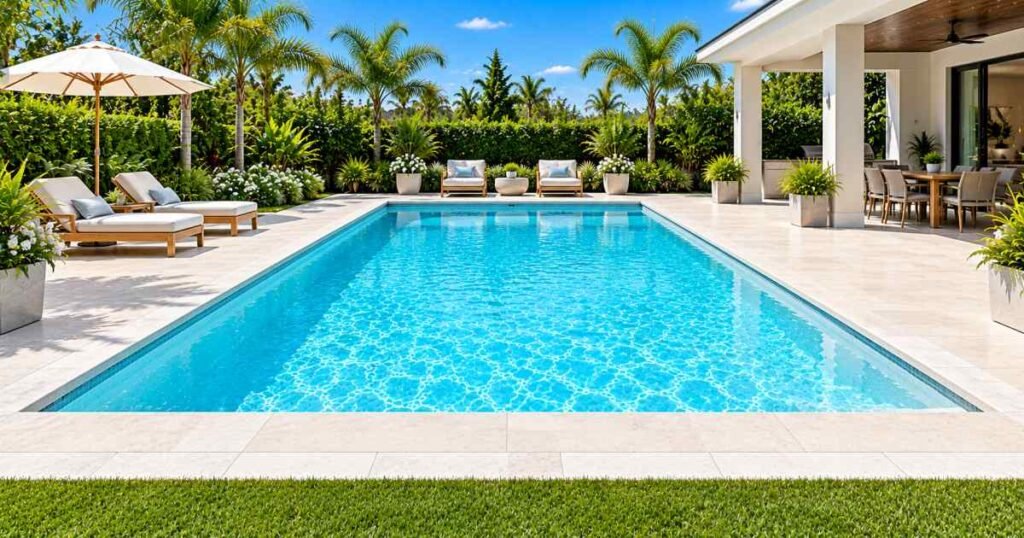
White, pale blue, and light gray finishes can give the water a bright appearance, particularly in sunny locations. These colors work well for homeowners who prefer a fresh, understated look. The final water color also depends on depth, sunlight, surroundings, and the finish material. Ask to see completed pools using the same product instead of relying only on a small sample.
10. Create a Dramatic Look with Dark Finishes
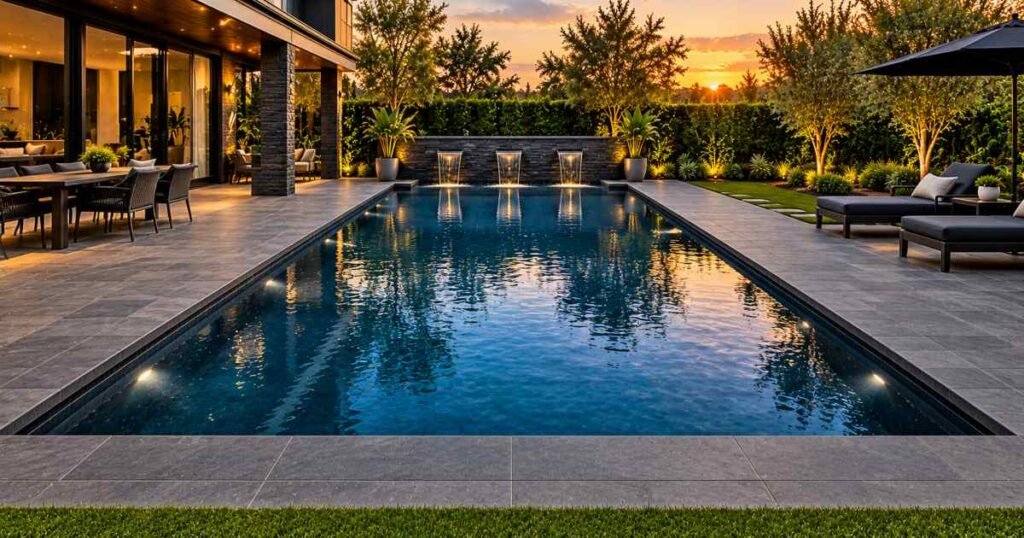
Charcoal, dark gray, and other deep tones can give a swimming area a more dramatic appearance. They may pair well with contemporary homes and darker coping. Review samples in both sunlight and shade before deciding. Ask the installer about surface temperature, visible debris, water clarity, and the maintenance needs of the chosen material. Keep in mind that dark plaster shows white calcium scaling and chemical residue much more visibly than lighter colors.
11. Frame the Water with Contrasting Coping

Coping forms the finished edge around the pool. A contrasting color can make the water stand out from the surrounding patio, while a coordinated border can tie the area to the home’s exterior materials. Appearance is only one consideration. Select materials designed for outdoor pool environments and suitable for wet conditions. Avoid abrupt level changes or narrow walking areas that make movement around the water difficult.
12. Build a Spacious Pool Deck
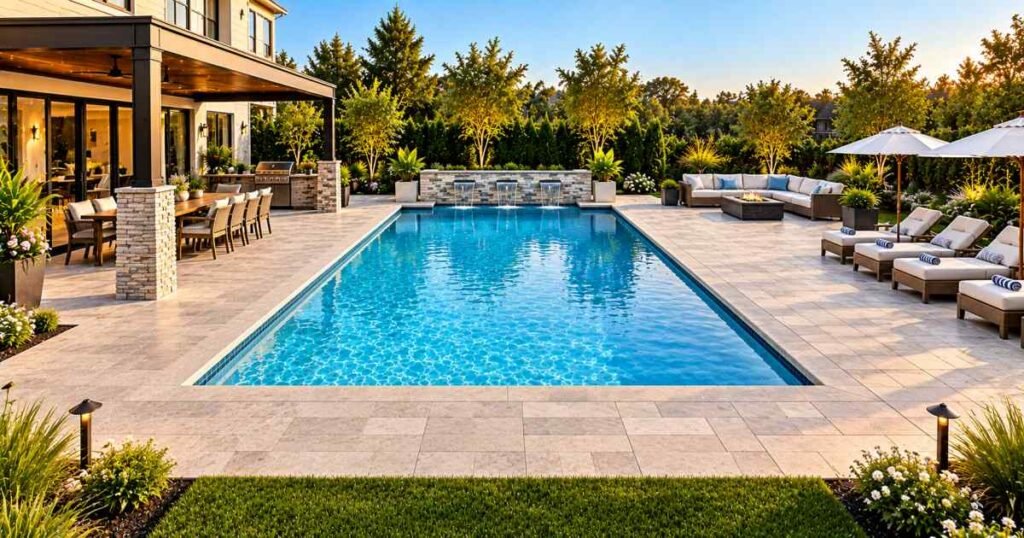
A generous deck gives swimmers room to dry off, sit, and move between the pool and the house. It can also create a natural separation between the water and outdoor dining or seating areas. The right amount of space depends on how you use your backyard. A household that entertains often may need more circulation room than one that mainly swims for exercise. Include drainage, furniture placement, equipment access, and required safety barriers in the plan.
13. Connect an Outdoor Spa
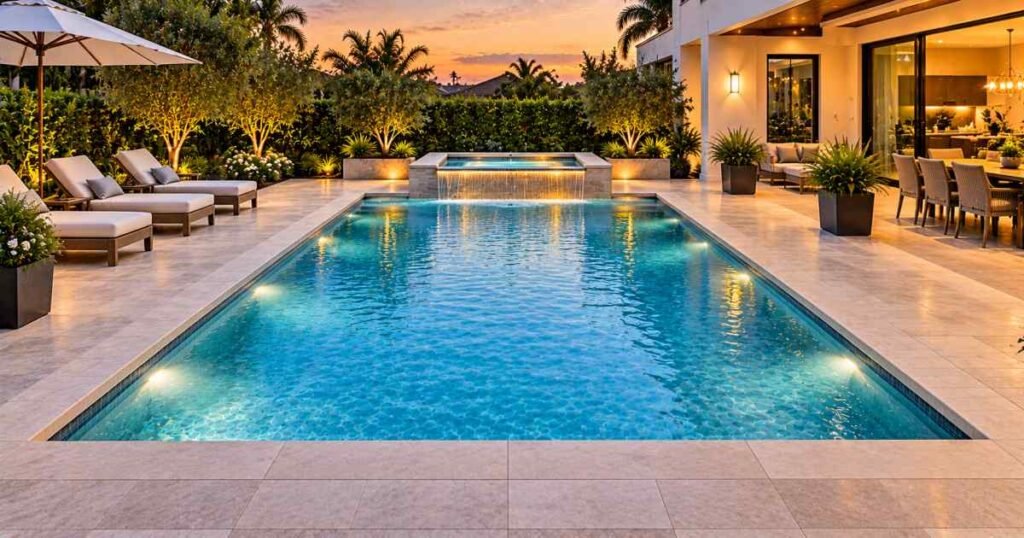
An attached spa can create separate areas for swimming and relaxation while maintaining a coordinated geometric layout. Depending on the property, it might sit at one end or along a side. This feature adds construction complexity. Ask about plumbing, heating, controls, circulation, and access for maintenance. Plan the connection before construction begins so the spa fits the overall layout rather than becoming an awkward addition later.
14. Use Lighting to Highlight the Shape
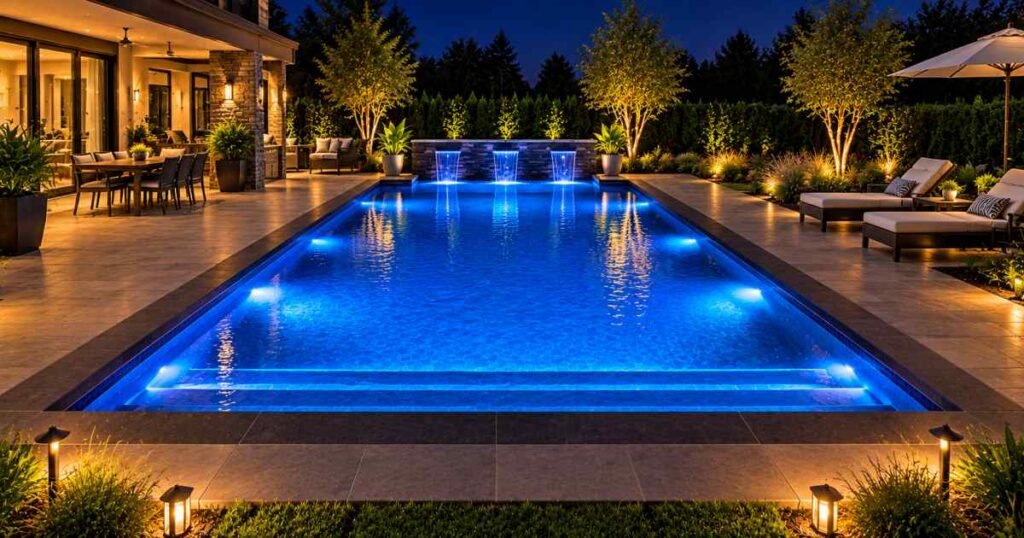
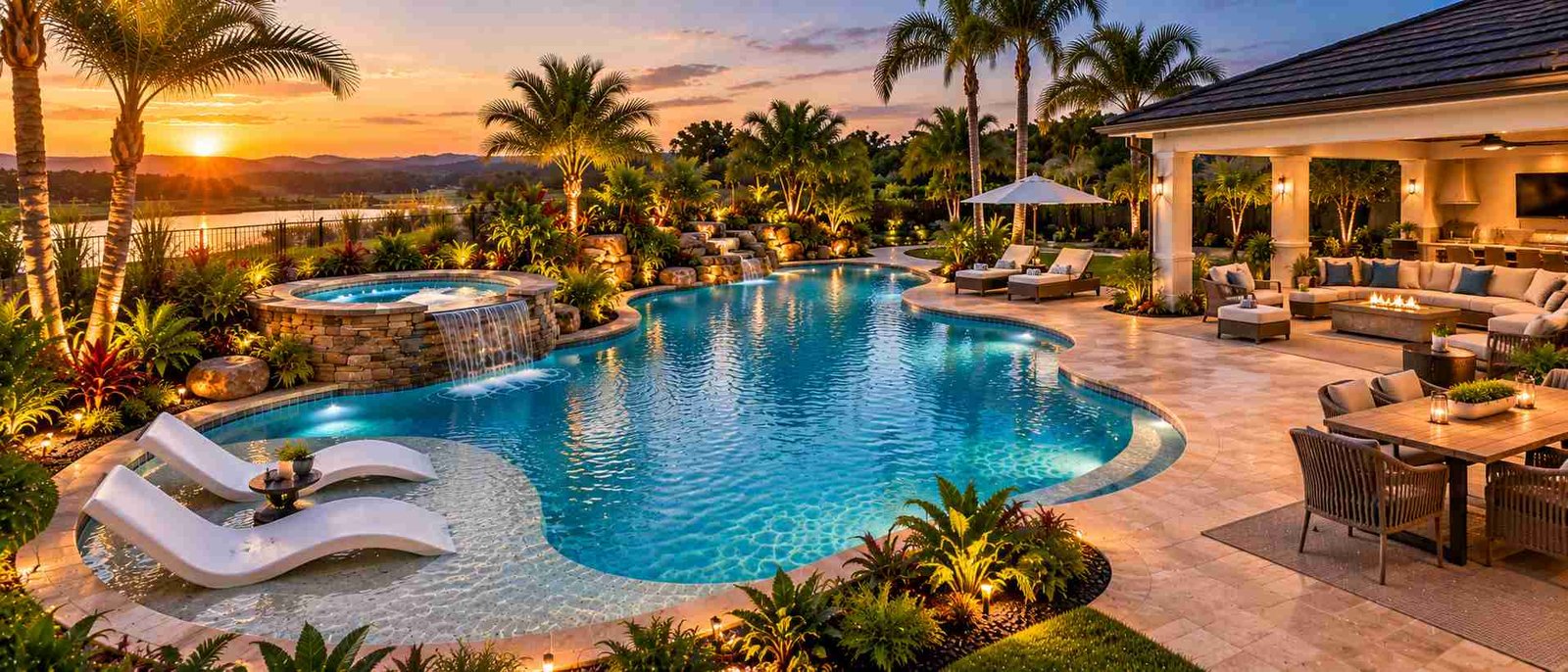
Lighting can make the pool area more inviting after sunset and help define the water’s outline. Underwater lights, low-level path lighting, and carefully positioned landscape lights can create different effects without making the yard feel overly bright. Electrical work around pools requires specialist knowledge. Use qualified professionals familiar with local rules for pool lighting, bonding, grounding, and equipment placement. Plan fixture locations early so they work with the pool structure and surrounding walkways.
15. Soften Straight Edges with Landscaping

Plants can soften the clean lines of a geometric pool. A narrow planting bed, ornamental grasses, low-maintenance shrubs, or a few containers can add texture without overwhelming the space. Choose plants according to your climate, root growth, and leaf drop. Heavy shedding near the water can increase cleaning, while roots may affect nearby paving or underground structures. Keep equipment accessible and make sure plants do not obstruct barriers or gates.
Pros, Cons, Costs, and Benefits
A rectangular design suits many properties, but it is not automatically the best choice for every yard. Consider the practical advantages and trade-offs before making a decision.
Benefits
The simple outline can complement a wide range of home styles and makes it easier to plan the surrounding patio. Straight sides are also useful for lap swimming and can simplify measurements when estimating surface area and water volume. The layout can accommodate wide steps, underwater benches, tanning ledges, and attached spas, depending on the dimensions and budget.
Potential Drawbacks
Straight edges may feel less natural in a yard built around curved paths and informal planting. A long pool can also dominate a small property if the surrounding space is not planned carefully. Custom features, premium finishes, lighting, decking, and difficult site conditions can all add to the bill. Do not assume a rectangular design will cost less simply because its lines are straight.
How Much Does It Cost?
The price depends on whether the pool is above ground or inground, its dimensions and depth, construction material, local labor rates, and selected features. Excavation, permits, fencing, drainage, decking, pumps, and finishing work can all add to the budget. For a general overview of installation costs and common extras, consult Angi’s swimming pool cost guide. Published averages are useful for early planning, but they are not a quote for your property. Request itemized estimates from local contractors and compare what each proposal includes.
Is It Easier to Maintain?
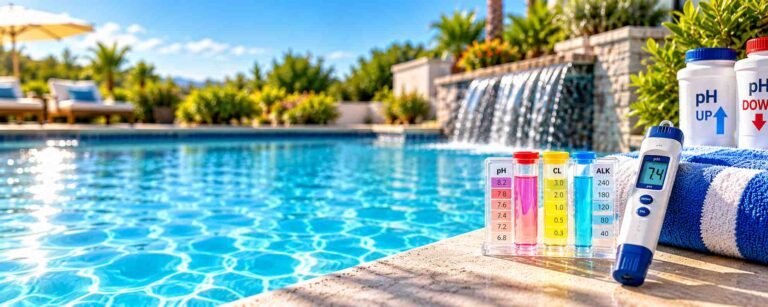
A straightforward layout may make some measurements and cleaning routines easier, but the shape does not remove the need for regular care. Filtration, circulation, sanitizer levels, pH, nearby debris, and surface materials all influence maintenance. Use our pool volume calculator to estimate how much water your planned pool will hold. Once it is in use, test the water regularly and follow equipment and chemical manufacturers’ instructions. The CDC explains the importance of proper chlorine and pH levels in its guide to home pool water treatment and testing.
How to Choose the Right Design for Your Backyard
Start by measuring the usable yard, including the space needed for decking, access, equipment, drainage, and required barriers. Check local zoning and building requirements before deciding on a location. Underground utilities, easements, setbacks, soil conditions, and construction access may affect what can be built.
Next, decide how the pool will be used most often. A lap swimmer has different needs from a family looking for a place to cool off or entertain guests. If your yard is limited in size, compare compact layouts with other options in our swimming pool shapes guide.
Choose materials and extras after settling the main dimensions. A tanning ledge or attached spa affects usable swimming space and the budget, so decide whether the feature is worth the trade-off before requesting final quotes.
Include safety measures from the beginning. The CDC’s residential pool safety guidance recommends a four-sided fence that fully encloses the pool, separates it from the house, and has a self-closing, self-latching gate. Local rules may require additional measures, so confirm requirements with your local authority.
Frequently Asked Questions
Are rectangular pools suitable for small backyards?
Yes, in some yards. A compact design may fit a narrow or defined area, but account for setbacks, equipment access, drainage, barriers, and usable deck space—not just the water dimensions. A “spool” may be worth considering when relaxation matters more than swimming length.
Are rectangular pools cheaper than freeform pools?
No, not necessarily. A simple rectangular shell may be straightforward to lay out, but soil conditions, access for excavation, retaining walls, construction material, decking, and premium coping can change the total considerably. Compare itemized quotes for projects with similar dimensions and features rather than comparing shapes alone.
What is the best size for a backyard pool?
There is no single best size. The right dimensions depend on how many people will use it, available space, budget, and whether you plan to swim laps, relax, or entertain. Discuss your intended use with a pool builder before choosing dimensions.
Can I add a tanning ledge or spa?
Yes. Both features can be incorporated into many geometric layouts. They require careful planning because they affect usable swimming space, plumbing, heating, circulation, and construction costs.
Do rectangular pools require less maintenance?
No. A rectangular shape does not automatically mean less maintenance. Pool size, nearby trees, filtration, water chemistry, weather, and how often the pool is used have a much greater effect on routine care.
What materials are suitable for the surrounding deck?
Common choices include concrete pavers, natural stone, and porcelain pavers rated for outdoor use. Compare wet-surface traction, heat retention, drainage, durability, and cleaning needs before selecting a material.