| Summary: Cleaning algae from pool surfaces means scrubbing away visible patches, collecting the debris, and cleaning the filter afterward. The right approach depends on the algae, the amount of residue, and your pool finish. Physical cleanup removes dead algae and loosened growth; it does not replace water treatment when algae is still alive. |
Algae is one of the most common pool problems, and scrubbing is the step people rush. Brush with the wrong tool and you scratch a liner. Vacuum the wrong way and fine dead algae slips through the filter and drifts back into the water. This guide gives the order that works, the tools to use, and the settings to check.
Why Physical Cleaning Matters?
Algae often collect along walls, steps, corners, shaded areas, and the pool floor. After treatment, dead algae can still leave a dusty layer behind. Brushing lifts that residue so you can remove it instead of letting it circulate or settle again.
Know Your Algae
| Type | What it looks like | Cleanup note |
| Green | Slimy green film, cloudy green water | Brushes off easily. Vacuum after treatment. |
| Mustard | Yellow-brown dust in shaded spots | Returns fast. Also clean ladders, toys and swimsuits. |
| Black | Dark spots rooted in plaster or grout | Needs a stiff brush and repeated scrubbing. |
Tools You Need to Clean Pool Algae
You will need following basic tools before you begin cleaning pool algae:
- Pool brush with bristles approved for your pool finish.
- Telescopic pole to reach walls, steps, and the deep end.
- Leaf skimmer to remove floating debris and larger clumps.
- Pool vacuum to collect algae residue from the floor.
- Pool water test kit to check sanitizer and water balance.
- Filter-cleaning supplies recommended for your filter model.
How to Clean Algae from Pool Surfaces
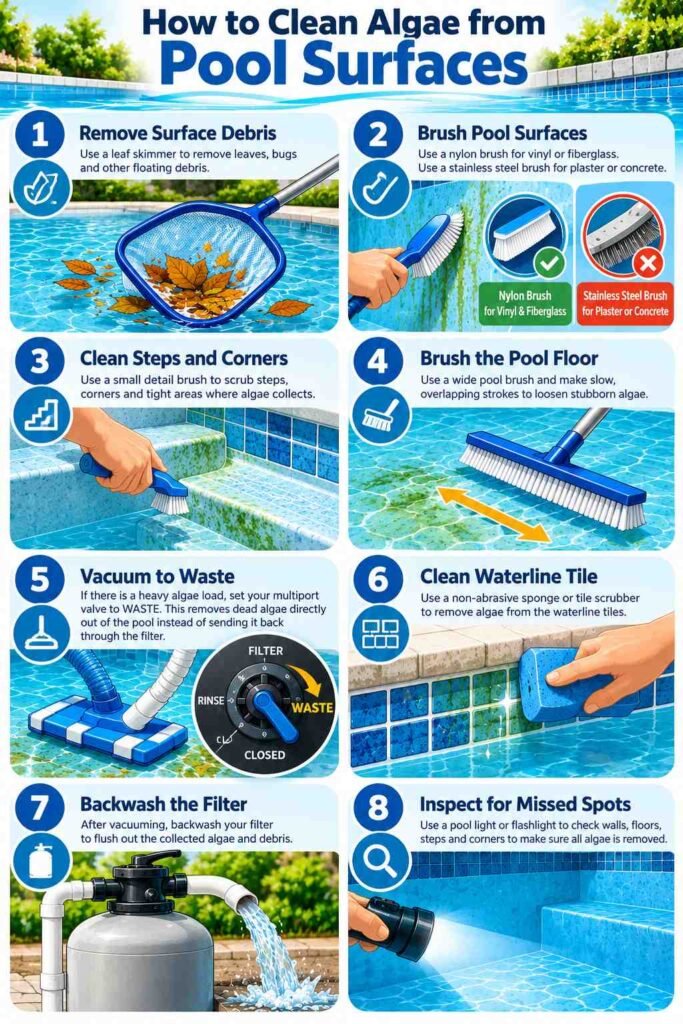
1. Remove Floating Debris
Skim leaves, insects, and floating clumps before brushing. This keeps larger debris out of the filter and makes it easier to see the algae residue. Empty baskets as needed, following the equipment manual before opening any components.
2. Brush the Pool Walls
Brush the walls with steady, overlapping strokes, working from the waterline toward the floor. Focus on corners, steps, benches, shaded areas, spaces behind ladders, and around return fittings. For vinyl and fiberglass, use a soft nylon-bristle brush. On unpainted plaster or concrete, a stainless-steel algae brush may be appropriate for stubborn growth, but check the pool finish and manufacturer guidance first. Never use a steel brush on vinyl or fiberglass.
3. Clean Steps and Tight Corners
Use a smaller nylon brush or pool-safe scrubber around steps, fittings, and tight corners. Avoid scraping seals or fittings with metal tools. If a patch will not come off with the correct brush, stop before you damage the surface; stubborn growth may need targeted treatment as well as cleaning.
4. Brush the Pool Floor
Brush the floor in sections, using controlled strokes to move residue toward an area where it can be vacuumed. If brushing turns the water cloudy, pause and let the debris settle on the floor before vacuuming. Do not keep sweeping through a cloud of particles; you will only make them harder to collect.
5. Vacuum the Loosened Algae
Vacuum slowly in overlapping passes. If a visible layer of dead algae has settled on the floor, vacuuming to WASTE can be useful on sand or DE systems equipped with a multiport valve: the water and algae leave through the waste line instead of passing through the filter. This helps prevent fine debris from clogging the filter or returning through the pool jets. It also lowers the pool water level, so watch the level and refill as needed.
Turn off the pump before changing the valve position, and follow the filter manual. Cartridge filters usually have no WASTE setting; vacuum with a compatible setup and check the cartridge frequently.
6. Clean the Waterline
Use a pool-surface cleaner and a non-abrasive sponge or pad approved for your finish. Follow the product label and test it on a small, hidden area if you are unsure how the surface will react. Do not use household cleaners unless the pool manufacturer approves them.
7. Clean the Pool Filter
Brushing and vacuuming can send a lot of debris into the filter. Check the pressure gauge and follow the filter manual. Backwash sand or DE filters when the manufacturer’s pressure threshold is reached; after backwashing a DE filter, recharge it with the specified amount of DE. For cartridge filters, shut off the pump and release all pressure before opening the housing or removing the cartridge.
8. Inspect the Pool After Cleaning
Inspect the walls, floor, steps, and waterline. Repeat targeted brushing or vacuuming where residue remains. If the water stays cloudy, check the filter and consider whether fine debris is still suspended. If colored growth returns, test the water and address the algae treatment—not just the visible residue.
Common Mistakes to Avoid
Using the Wrong Brush
Using an overly aggressive brush can scratch fiberglass or damage a vinyl liner. Choose nylon for these finishes, and reserve stainless-steel algae brushes for compatible plaster or concrete surfaces.
Brushing Without Removing Debris
Brushing removes algae from the surface but leaves the debris in the pool. Vacuum it out or let the filtration system collect it.
Vacuuming Too Quickly
Fast vacuum strokes stir settled algae back into the water. Move the vacuum head slowly and overlap each pass.
Ignoring the Filter
A heavy load of dead algae can clog a filter quickly. Watch the pressure gauge and clean or backwash the system using the model-specific procedure.
Mixing Cleaning Chemicals
Never combine waterline surface cleaners directly with chlorine shock or bleach. Mixing incompatible pool chemicals can trigger violent reactions or release hazardous fumes. Follow product labels and keep cleaning products separate.
How to Keep Pool Surfaces Cleaner
A consistent pool maintenance routine makes cleanup easier and helps keep debris from accumulating.
- Brush walls, steps, and corners as part of routine maintenance.
- Skim floating debris before it sinks.
- Vacuum the floor when sediment becomes visible.
- Check filter pressure and maintain the filter as directed.
- Test water regularly and maintain sanitizer levels according to product guidance.
Frequently Asked Questions
Does brushing alone remove algae from a pool?
No. Brushing knocks algae off the surface, but the debris remains in the pool until you vacuum it out or the filter captures it. If the algae is still alive, physical cleaning alone will not solve the bloom; follow a suitable treatment plan and the product label.
Should I vacuum before or after brushing?
Brush first, then vacuum once the loosened material has settled on the floor. If the water is still cloudy, wait until you can see the debris collecting on the bottom rather than vacuuming blindly through suspended particles.
Can I use a household brush?
For vinyl liners and fiberglass, choose a soft nylon-bristle pool brush. A stainless-steel algae brush is intended for compatible plaster or concrete, not delicate finishes.
Why does residue keep appearing?
A dusty layer may be leftover dead algae, but new colored patches can mean the bloom is still active. Check the water chemistry, inspect the filter, and follow the treatment guidance for the algae you have.
Can a pool robot clean algae?
A compatible robotic cleaner can collect some loose algae and debris. Results depend on the cleaner and the type of residue; heavy buildup or fine particles may still require manual brushing, vacuuming, and filter maintenance.
Is it safe to swim immediately after cleaning?
Not automatically. Cleaning surfaces does not confirm that the water is safe for swimming. Follow the directions for any treatment products used, test the water, and wait until the required swimming conditions are met.