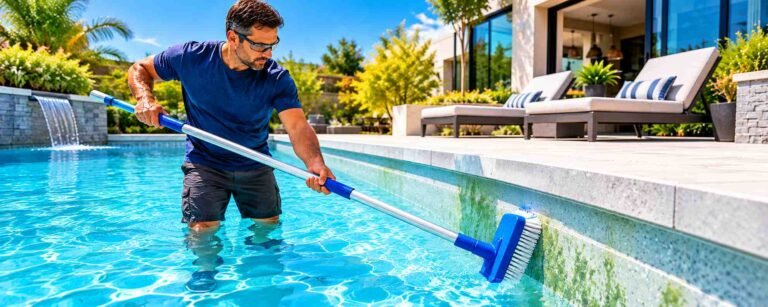
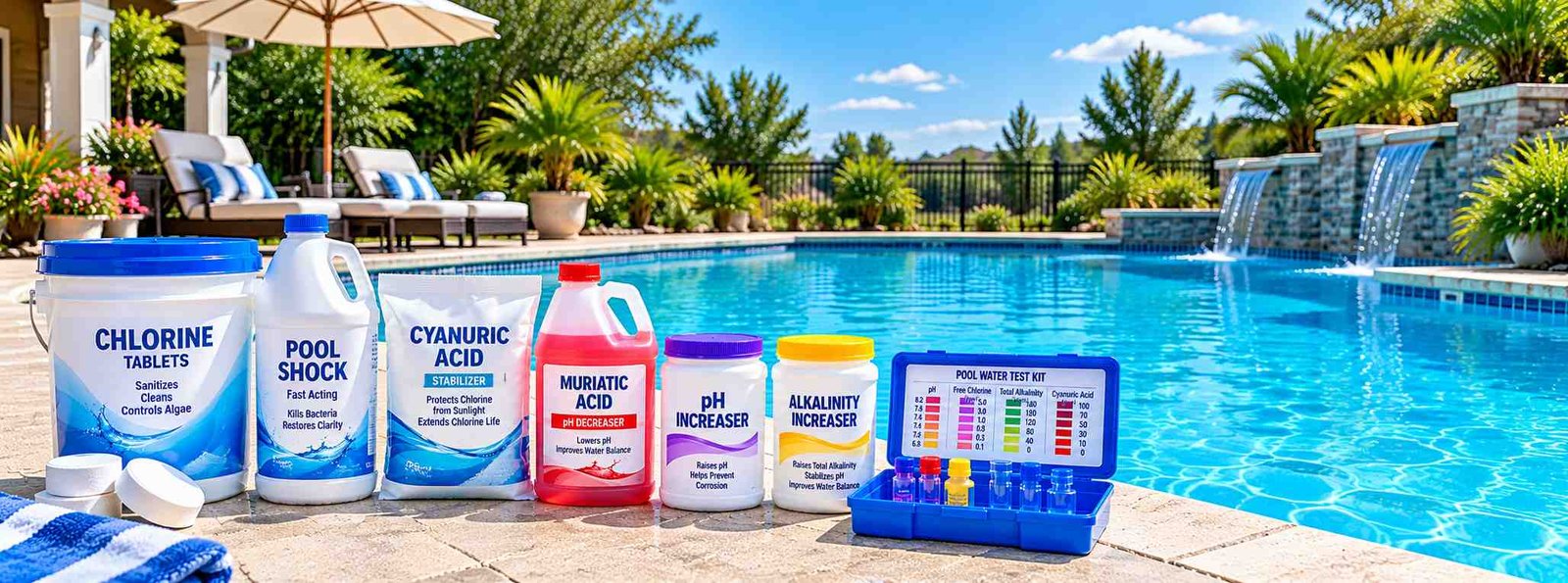
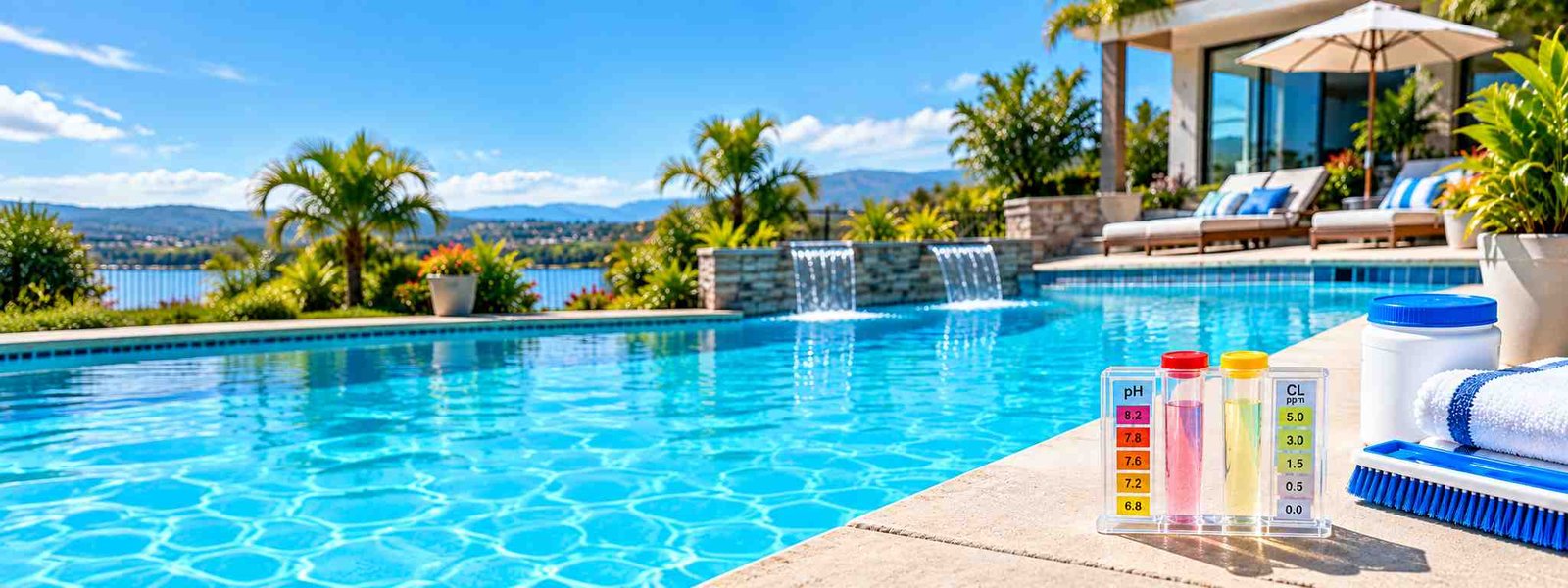
| Summary: pH tells you how acidic or basic your pool water is. Keep it in range and chlorine works more effectively, swimmers are more comfortable, and pool surfaces and equipment are less likely to suffer corrosion or scale. Learn what to do when pH is high or low, how total alkalinity affects pH stability, and when to use a water pH calculator or pool volume calculator to plan an adjustment. |
Pool water can look clear and still have an unbalanced pool pH. Regular testing helps you spot changes before they affect sanitizer performance, comfort, or the condition of pool surfaces and equipment. This guide explains the ideal range, why pH changes, how to test it, and how to keep it stable.
The Role of pH in Water Chemistry
Pool pH plays an important role in water chemistry. It affects how well chlorine sanitizes the water, how comfortable the water feels to swimmers, and whether the water tends toward corrosion or scale. When pH climbs, chlorine becomes less effective at killing germs. Low pH makes water corrosive and can damage metal parts, grout, and some pool finishes. For the health-based range and why it matters, consult the CDC’s pool water testing guidance
Why pH Rises or Falls
Pool pH often drifts upward because carbon dioxide escapes from the water, especially when fountains, waterfalls, spillover spas, or return jets agitate the surface. Saltwater chlorine generators also tend to push pH upward during operation. pH drops when you add too much acid, use acidic chlorine tablets such as trichlor over time, or refill with lower-pH water. Rain and new fill water can shift readings as well. Check the test results and recent maintenance before deciding what caused the change.
What Is the Ideal pH Range?
The CDC recommends keeping water pH between 7.0 and 7.8. Many residential pool owners aim for 7.4 to 7.6 as a practical day-to-day target. Below 7.0, water becomes more corrosive; above 7.8, chlorine loses effectiveness and scale becomes more likely. Follow local pool rules and any requirements for your specific surface or sanitation system.
| Reading | What it means | Practical next step |
| Below 7.0 | Below range; corrosion risk rises | Confirm the test and check TA. For a very low reading, stop adding chemicals and get a complete water test before correcting carefully. |
| 7.0–7.3 | Within the CDC range, toward the low end | Check TA and recent acid additions. If pH keeps falling, fix the cause instead of adding more acid. |
| 7.4–7.6 | Practical target for many residential pools | Keep testing and monitor chlorine; do not add chemicals just to chase a decimal. |
| 7.7–7.8 | At the upper end of the CDC range | Retest and check TA. If pH keeps climbing, review aeration and salt-cell operation and prepare a measured correction if it exceeds your target. |
| Above 7.8 | Above the CDC-recommended range | Confirm the result and check TA. Use a measured dose of muriatic acid or dry acid according to the label; high TA can increase acid demand and pH may rebound if the cause is not addressed. |
Do not chase one odd reading. Retest it, then record pH, total alkalinity, chlorine, recent chemical additions, refill water, and water-feature use. Patterns in that log will usually tell you more than a single test.
How to Test pH
Use fresh reagents or unexpired strips and follow the test instructions exactly. Collect water from elbow depth, away from return jets, skimmers, and chemical feeders. Read the color at the specified time. If the result looks wrong, test a new sample; very high chlorine can interfere with some tests. Test pool pH and chlorine 2 to 3 times a week, or daily during periods of heavy pool parties and intense summer heat.
A pool pH test kit should let you check pH, chlorine, and total alkalinity together. A digital pH tester is convenient, but calibrate and store it as directed. Confirm surprising results before adding pool chemicals.
Common Reasons pH Rises
Aeration and Water Features
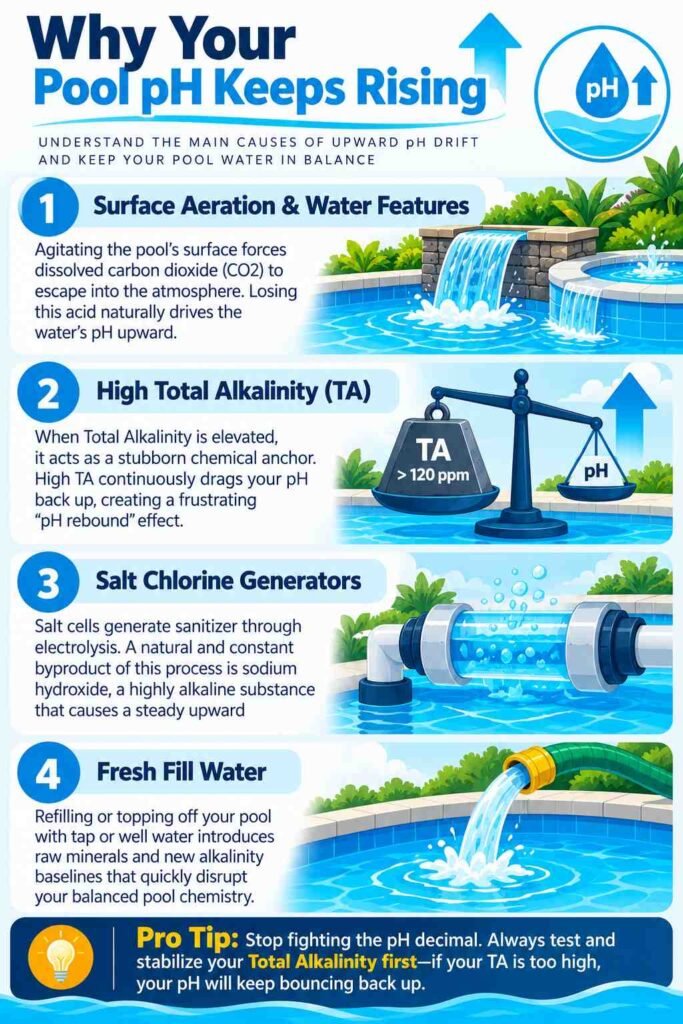
Aeration is a common reason pool pH rises. Fountains, spillover spas, waterfalls, and returns aimed at the surface drive carbon dioxide out of the water, which raises pH. If readings climb faster when a feature runs, account for it in your maintenance routine; do not compromise required circulation.
Total Alkalinity and pH Drift
Total alkalinity (TA) is the buffer that resists rapid pH changes. When TA is too low—often below about 80 ppm—pH can bounce sharply after rain or chemical additions. When TA is high—often above about 120 ppm—pH can be stubborn to lower and may keep drifting upward, especially in a pool with strong aeration. Treat these as troubleshooting thresholds, not universal targets; the right TA range depends on your sanitizer, pool surface, and water balance.
Salt Chlorine Generators
Salt chlorine generators produce chlorine by electrolysis, and the high-pH conditions around the cell help explain why saltwater pools often drift upward. If your pH keeps climbing, track TA and the rate of change before repeatedly adding acid. A lower, suitable TA target may reduce the frequency of corrections; choose the target for your system and follow its guidance.
Fresh Fill Water and Recent Treatments
Tap and well water bring their own pH, alkalinity, and mineral content. Log refills and chemical additions so you can spot what changed before making another adjustment.
Common Reasons pH Drops
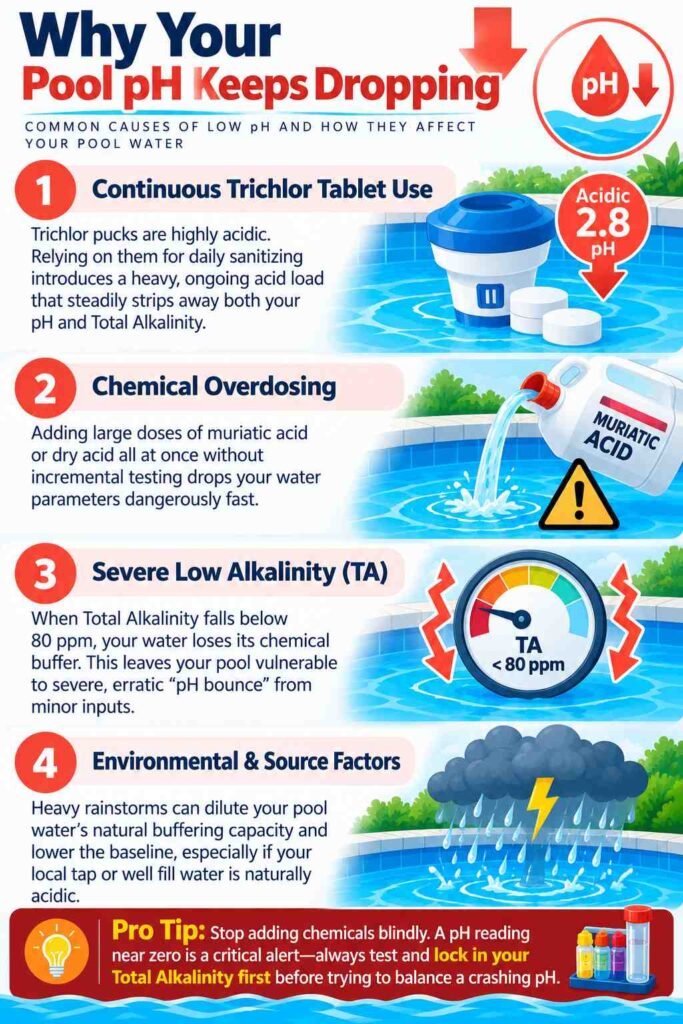
Repeated low pool pH often follows overdosing acid, adding acidic fill water, or using trichlor tablets continuously. Trichlor pucks are strongly acidic and steadily consume pH and total alkalinity during use. If you rely on a tablet feeder, include that ongoing acid load in your diagnosis instead of blaming rain or the test kit alone.
Rain can dilute pool water and change its chemistry, but its effect depends on the rainwater and the pool’s buffering capacity. Check TA and recent chemical history before blaming a pH drop on weather alone.
Why pH Can Be Difficult to Control
When pool pH seems impossible to control, check the test method and total alkalinity before adding more chemicals. Very low TA makes pH unstable; high TA and aeration can make pH rebound after acid treatment. A TA result near zero is a serious warning of severe acid overdosing or a testing problem—not a normal “pH lock.” Confirm the reading with a reliable test, stop adding chemicals, and get a complete water analysis before attempting to rebalance the pool.
If pH remains erratic after retesting, take a fresh sample to a pool professional and request pH, total alkalinity, chlorine, and cyanuric acid results together. Change one variable at a time so you can see what actually fixes the problem.
How pH Relates to Other Water Chemistry Readings
pH is only one part of balanced pool water. Total alkalinity helps buffer pH and affects how easily it changes. Chlorine is the main sanitizer in many pools, and its effectiveness is affected by pH. Cyanuric acid helps protect chlorine from sunlight in outdoor pools, but it should be tested and managed separately. Calcium hardness also matters because water balance can influence scaling or corrosion. Review these readings together rather than trying to solve every water problem by changing pH alone.
What to Do When pH Is Too High or Too Low
When pH Is Too Low
When pool pH is low, confirm the reading with a fresh test, then check total alkalinity. Low pH can make pool water corrosive, so do not ignore it. If pH is below your target and the result is confirmed, use soda ash (sodium carbonate) to raise it. Baking soda is mainly used to increase total alkalinity; use it when TA is also low rather than as the first choice for correcting pH alone. Estimate the water volume with the pool volume calculator, and use the pH Calculator only if its inputs match your pool and treatment. Follow the product label, add one chemical at a time, allow circulation, and retest before adding more.
When pH Is Too High
When water pH rises above 7.8, chlorine becomes less effective, and the water can develop cloudiness, scale buildup, and mineral deposits. To lower pH, use a pool-specific pH reducer, such as muriatic acid or dry acid, following the product label. Check total alkalinity before treatment, as high alkalinity can make pH difficult to control. Allow the water to circulate and retest before adding more chemicals. If your pH constantly rebounds after adding acid, check your total alkalinity. If it is above 120 ppm, lowering alkalinity first can help reduce upward pH drift; use the target recommended for your pool and sanitizer system. Never mix acid with chlorine.
Common pH Problems and What to Check
| Pattern | First things to investigate |
| pH climbs after the pool runs | Water features, aeration, salt chlorine generator operation, and total alkalinity. |
| pH drops over several days | Trichlor tablets, repeated acid additions, source water, and total alkalinity. |
| Test results jump around | Reagent age, sample collection, reading time, calibration, and possible sanitizer interference. |
| pH seems difficult to control | Testing accuracy, alkalinity, aeration, CYA and sanitizer readings, and chemical history. |
| Water is cloudy despite an acceptable pH | Sanitizer level, filtration, circulation, and other water-quality conditions. |
Frequently Asked Questions
Is a water pH of 8.0 too high?
Yes. A pH of 8.0 is above the CDC-recommended range of 7.0 to 7.8. Confirm the reading, check other water chemistry results, and follow the product label if a correction is needed.
Does baking soda raise water pH?
Baking soda raises total alkalinity quickly but only nudges pH upward. If pH is low and total alkalinity is already in range, use soda ash instead. If both pH and alkalinity are low, test and plan the correction based on both readings.
Do trichlor tablets lower water pH?
Yes. Trichlor tablets are acidic. Regular use in a feeder steadily lowers pH and total alkalinity, so monitor both readings and account for the tablets when planning maintenance.
Does high total alkalinity always make pH rise?
No. TA buffers pH changes. Low TA leaves pH prone to bouncing; high TA, especially with aeration, can make pH drift upward and increase acid demand.
What should I check if pH keeps bouncing?
Start with a fresh pH and total alkalinity test. Low TA causes unstable readings, while high TA combined with aeration can make pH keep climbing. Check chlorine and cyanuric acid (CYA) too. CYA protects chlorine from sunlight in outdoor pools, so include it when reviewing water chemistry, but do not assume CYA alone is the cause of pH fluctuations.
Should I adjust pH every day?
Not automatically. Test on a consistent schedule and adjust when reliable readings and pool conditions call for it. Frequent corrections without identifying the cause can make the water harder to manage.